Anfiteatro Portal Bosque, La Barra, Maldonado, Uruguay. 2023.
Anfiteatro Portal Bosque, La Barra, Maldonado, Uruguay. 2023.

Anfiteatro Portal Bosque, La Barra, Maldonado, Uruguay. 2023.
Anfiteatro Portal Bosque, La Barra, Maldonado, Uruguay. 2023.
Anfiteatro Portal Bosque, La Barra, Maldonado, Uruguay. 2023.
Anfiteatro Portal Bosque, La Barra, Maldonado, Uruguay. 2023.
Anfiteatro Portal Bosque, La Barra, Maldonado, Uruguay. 2023.
Anfiteatro Portal Bosque, La Barra, Maldonado, Uruguay. 2023.
TEXT
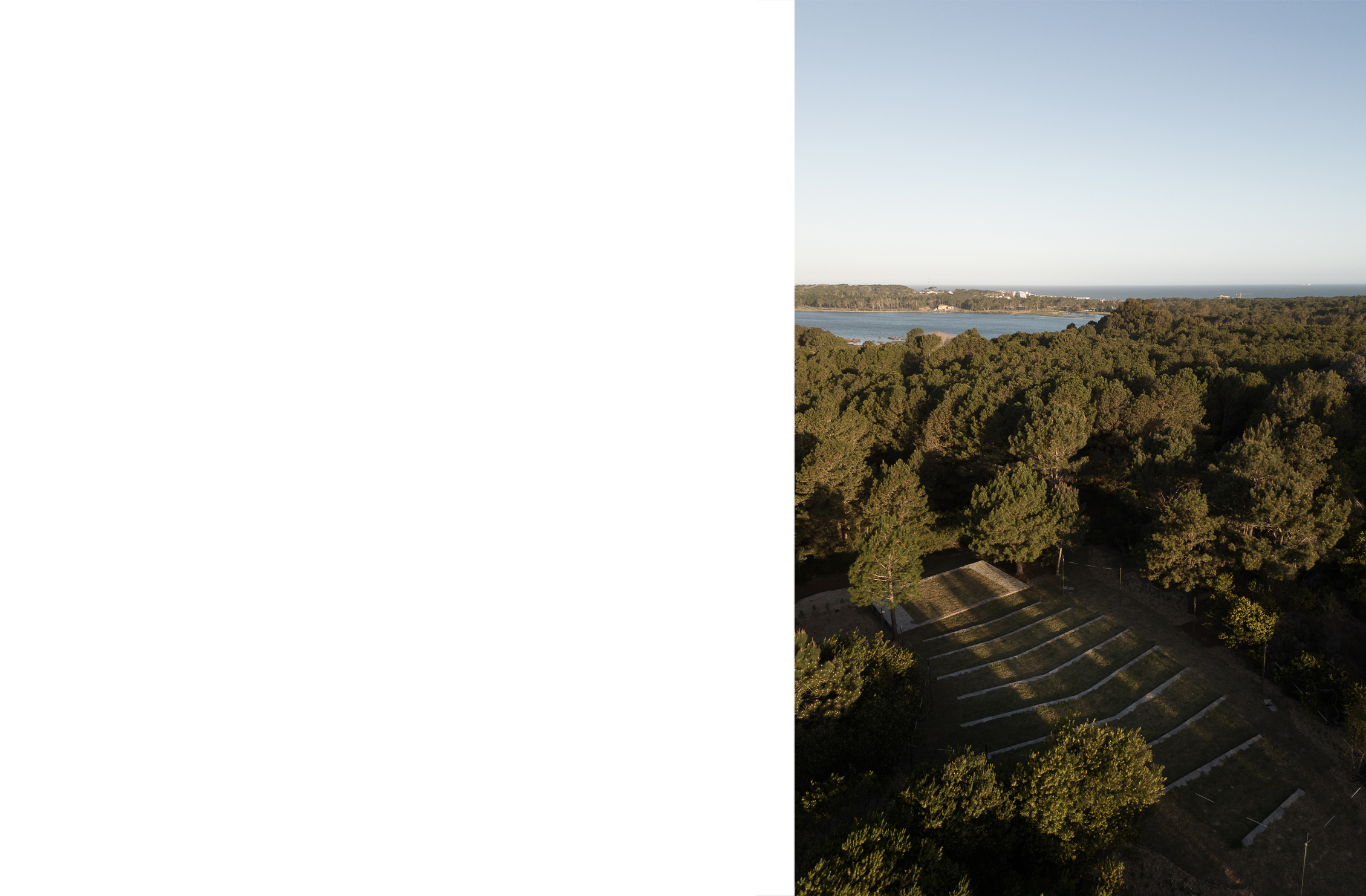
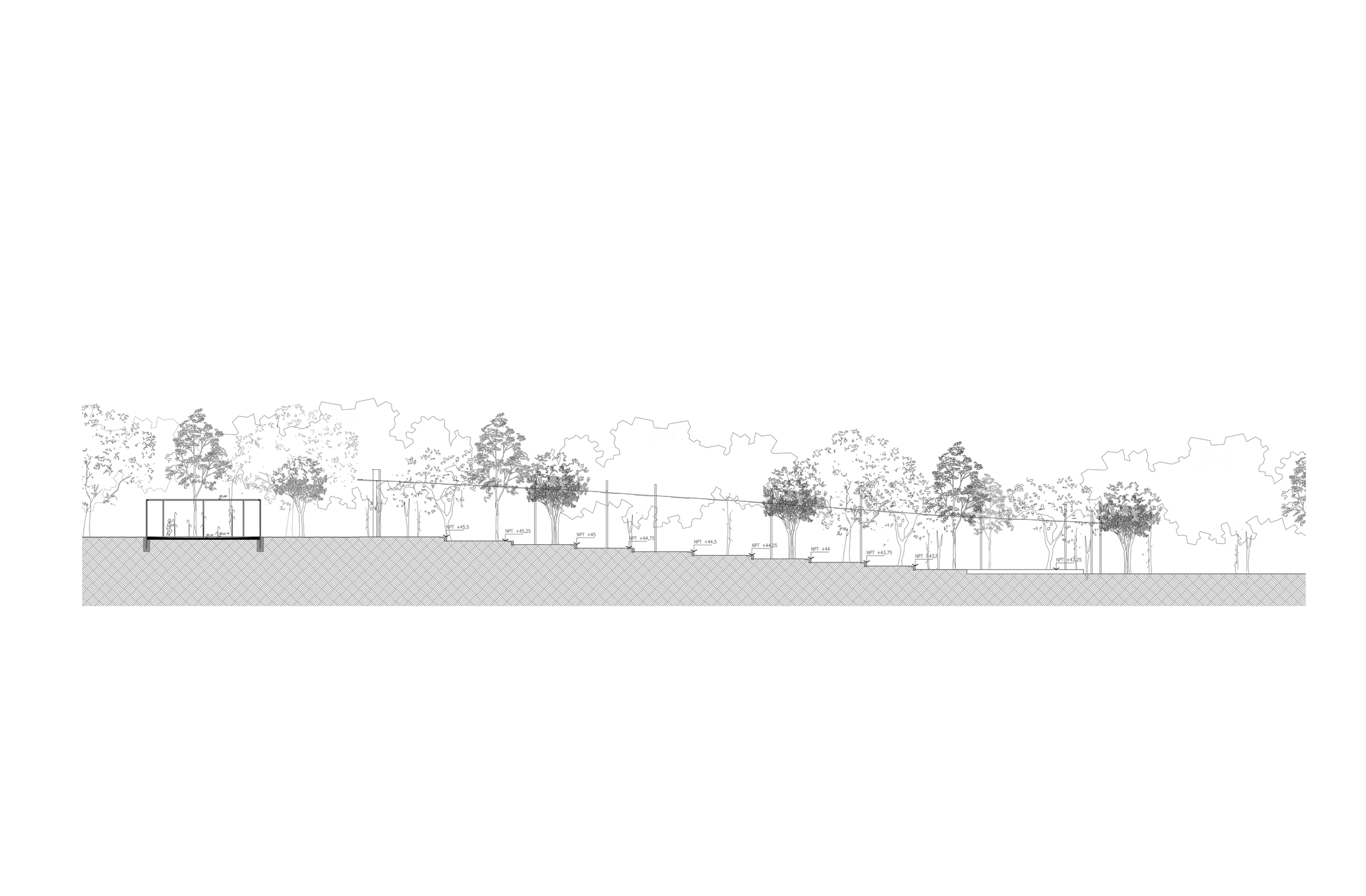
The amphitheater identifies and occupies an existing clearing at the far end of the site, whose gentle slope remains unaltered. The intervention is primarily landscape-based, preserving as much of the natural condition as possible while introducing only the minimum elements necessary to enable large gatherings during open-air performances, and to allow its use as a stepped plaza for picnics or a nap in the sun the rest of the time.
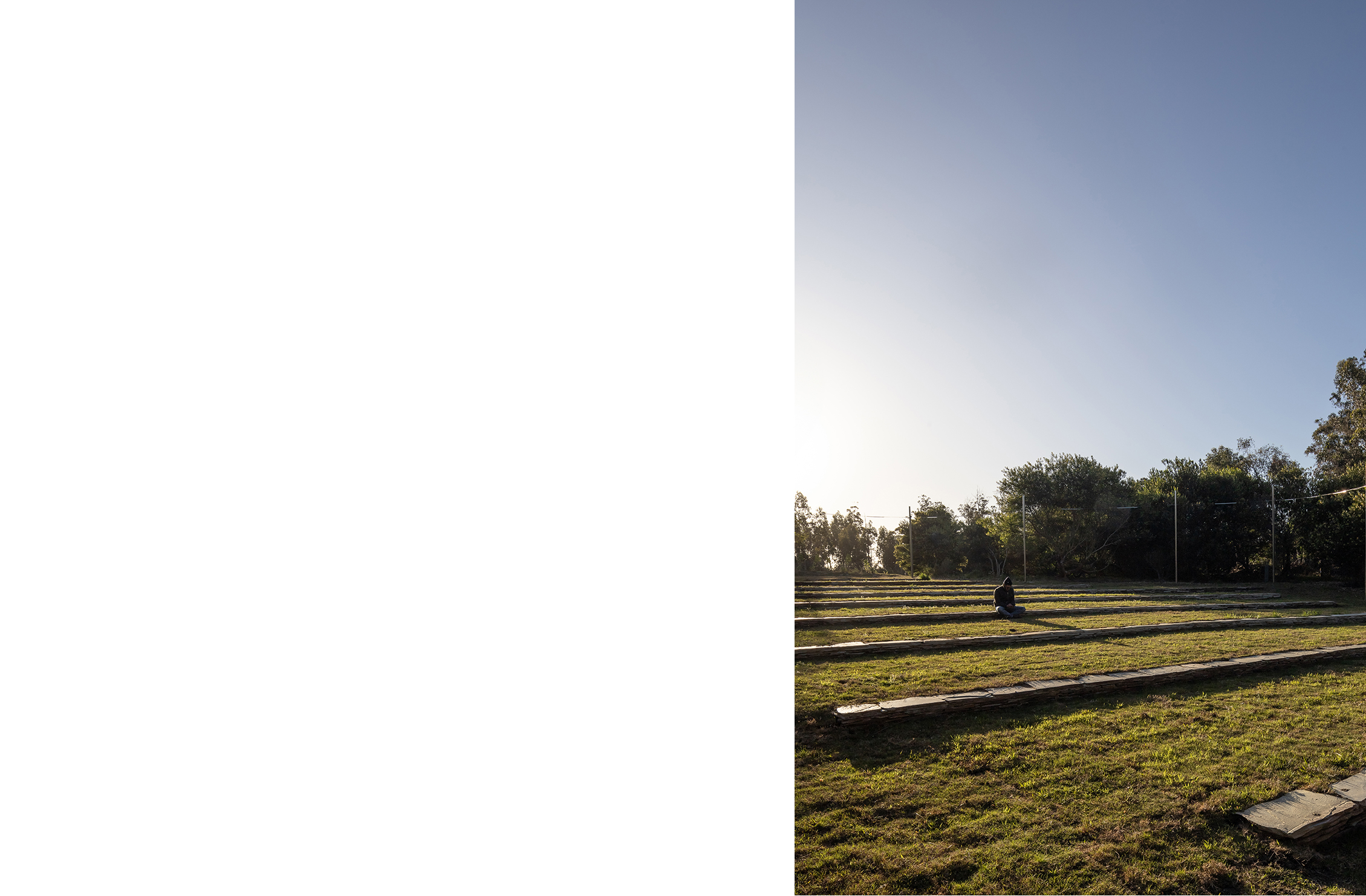
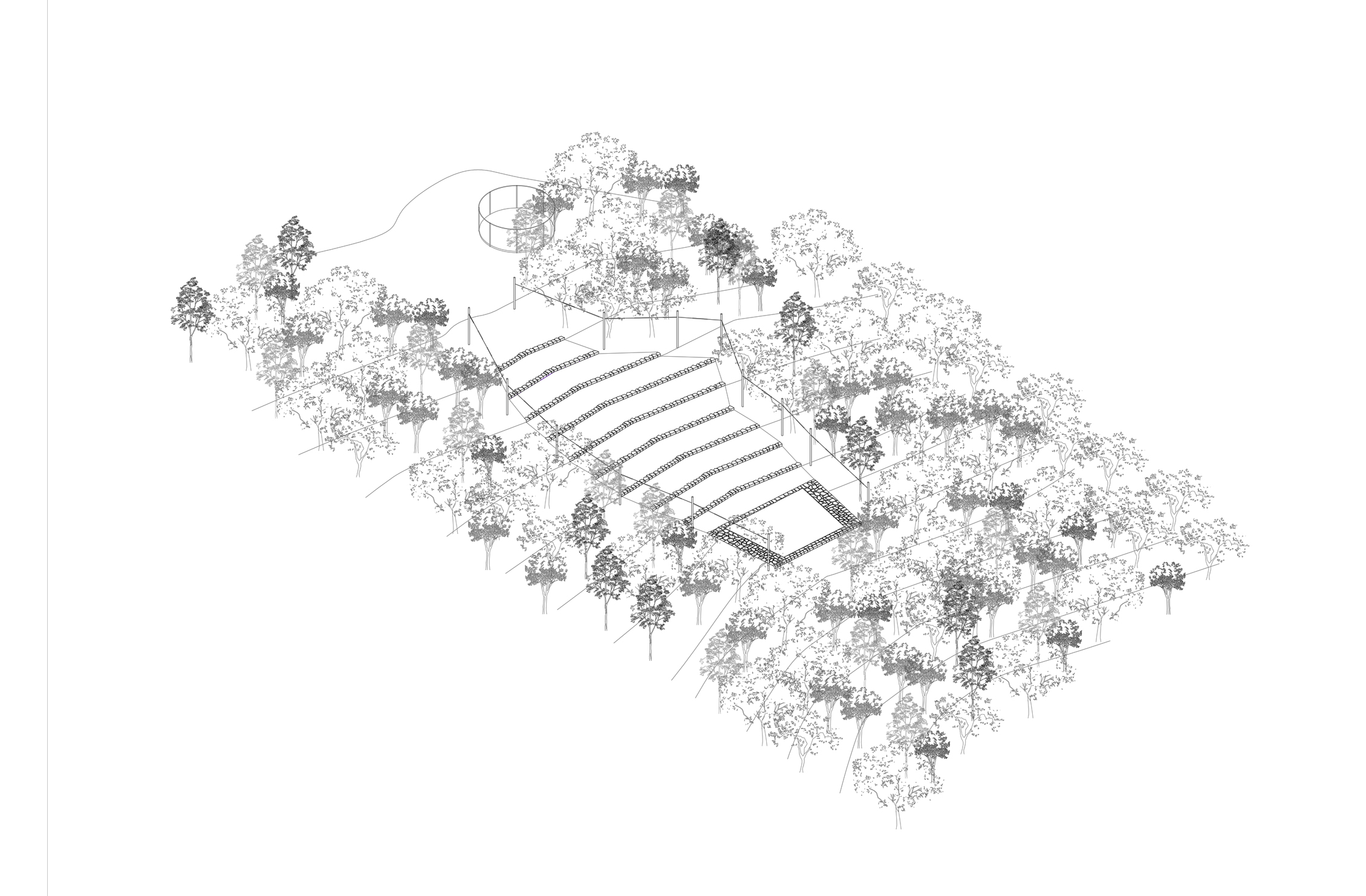
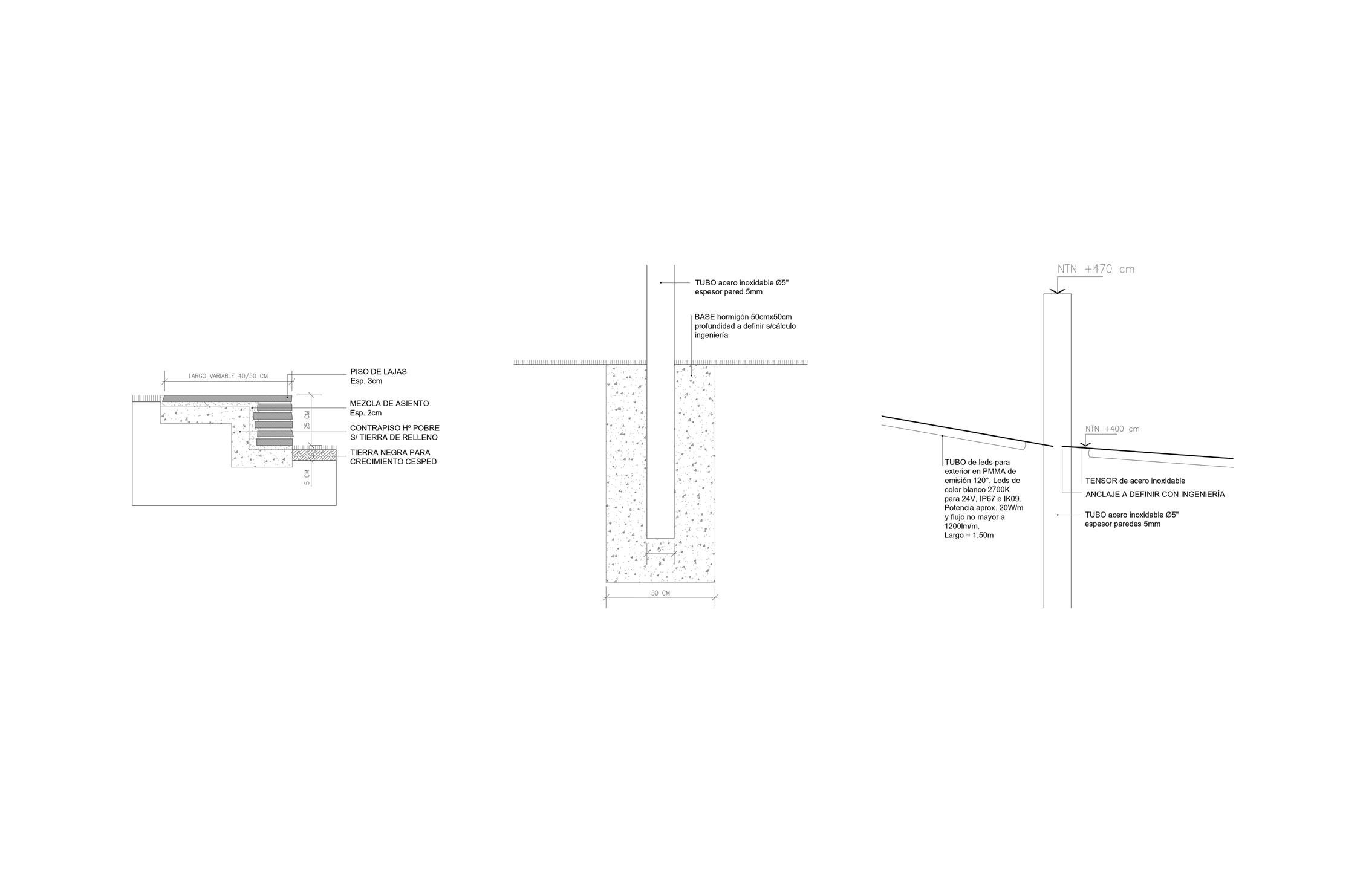
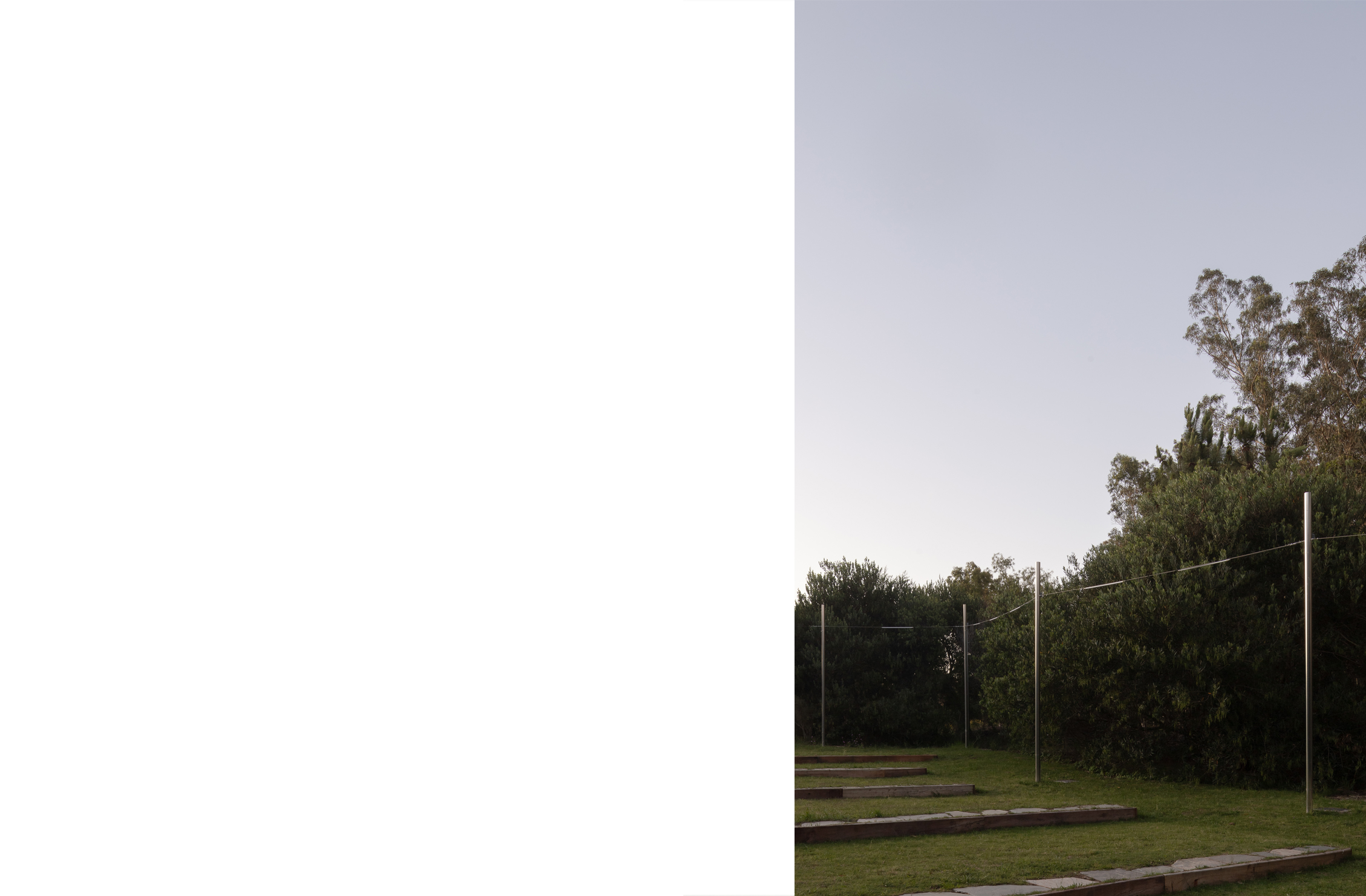
Based on the contour lines derived from the survey plan, a series of seating fronts is defined, following their geometry and generating a topography of small, stepped green terraces. The fronts are built using locally sourced flagstone, stacked in a way that reveals their irregular form along the upper edge of each tier.
At the lowest point of the clearing, a stage is placed, built according to the same constructive logic as the seating tiers, and equipped with two lateral support areas for the temporary installation of performance equipment.
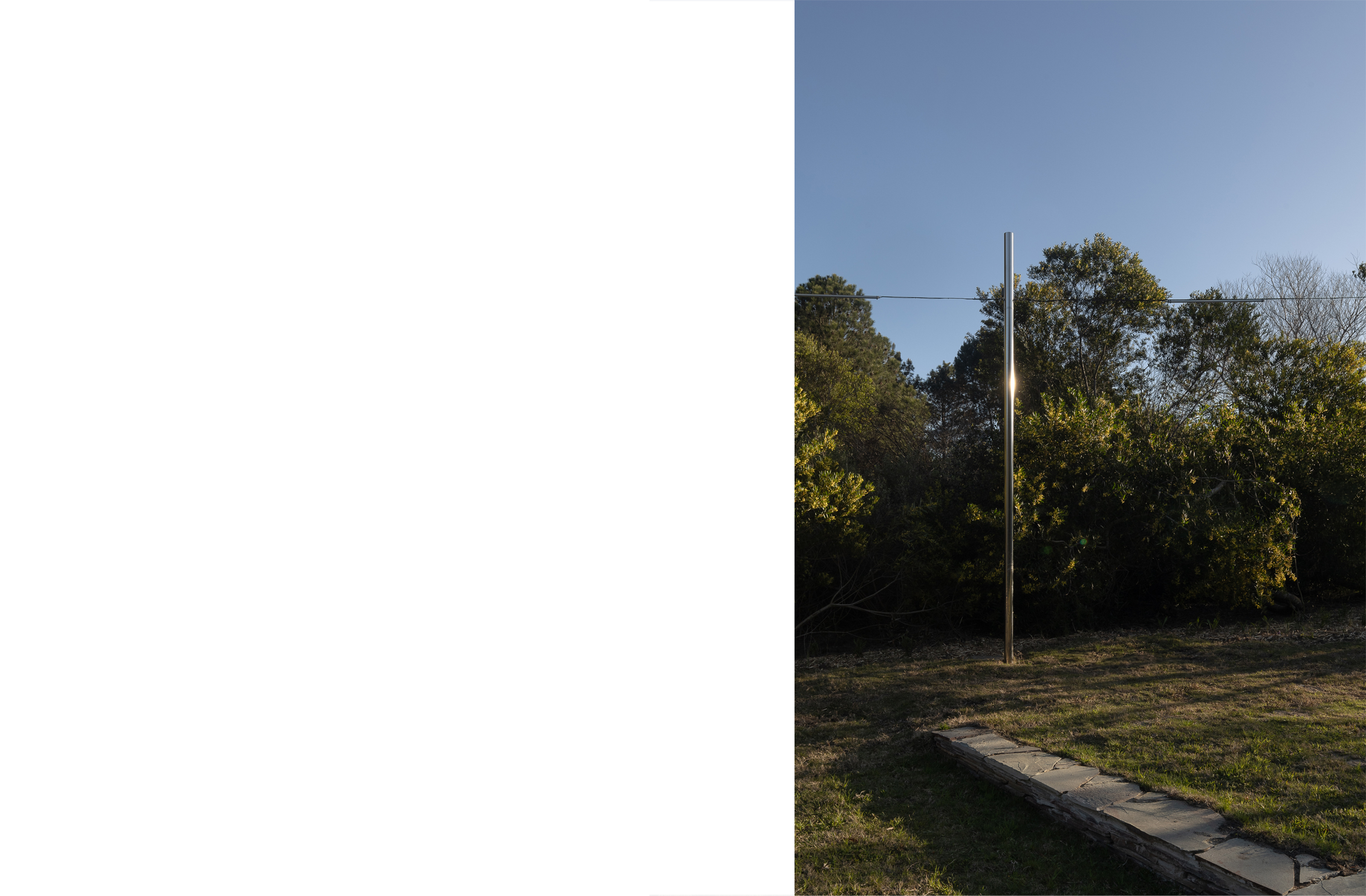
Closely tracing the tree canopies, a halo of lights outlines the organic perimeter of the clearing, defining the amphitheater void through illumination. The fixtures are supported by a tensioned cable threaded between slender stainless steel columns that reflect the surrounding vegetation and the sky. At night, this halo of light appears within the dark forest, drawing in spectators and recreating the brightness that the clearing possesses during the day.