
Piscina Casa View, Rosario, Argentina. 2023.
Piscina Casa View, Rosario, Argentina. 2023.
Piscina Casa View, Rosario, Argentina. 2023.

Piscina Casa View, Rosario, Argentina. 2023.

Pileta Casa View, Rosario, Argentina. 2023.

Pileta Casa View, Rosario, Argentina. 2023.
Piscina Casa View, Rosario, Argentina. 2023.
Piscina Casa View, Rosario, Argentina. 2023.

Piscina Casa View, Rosario, Argentina. 2023.
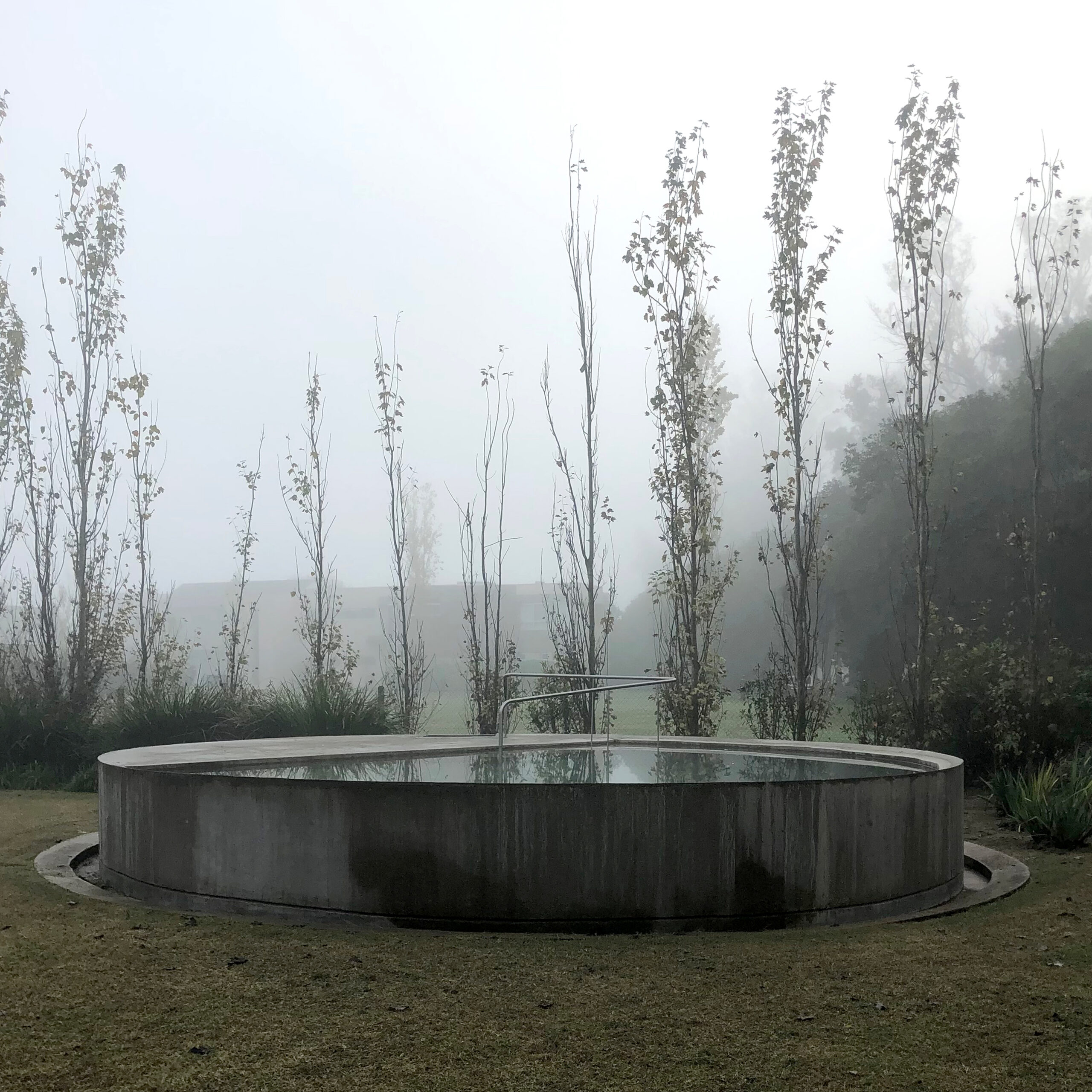
Piscina Casa View, Rosario, Argentina. 2023.
TEXT
As an addition to the View House, a pool and a quincho (outdoor barbecue pavilion) were requested to complement domestic life. They were designed as a group of three parts, each positioned as far away from the others as possible. Construction was carried out in two stages to interfere as little as possible with the use of the house and the rest of the site. Faced with an existing house of strong character, the two extensions chose to continue its materiality but with simpler formal solutions.
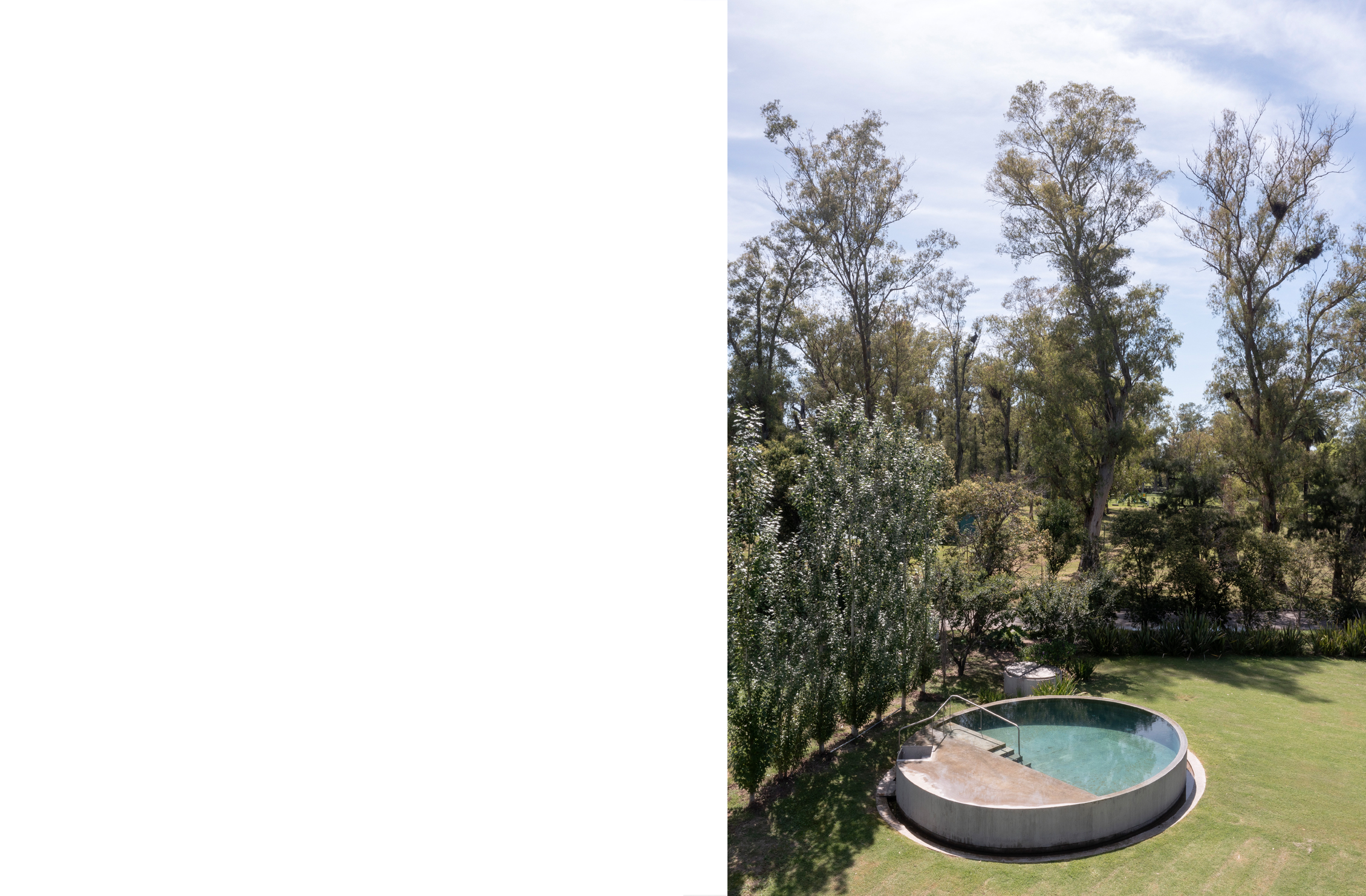
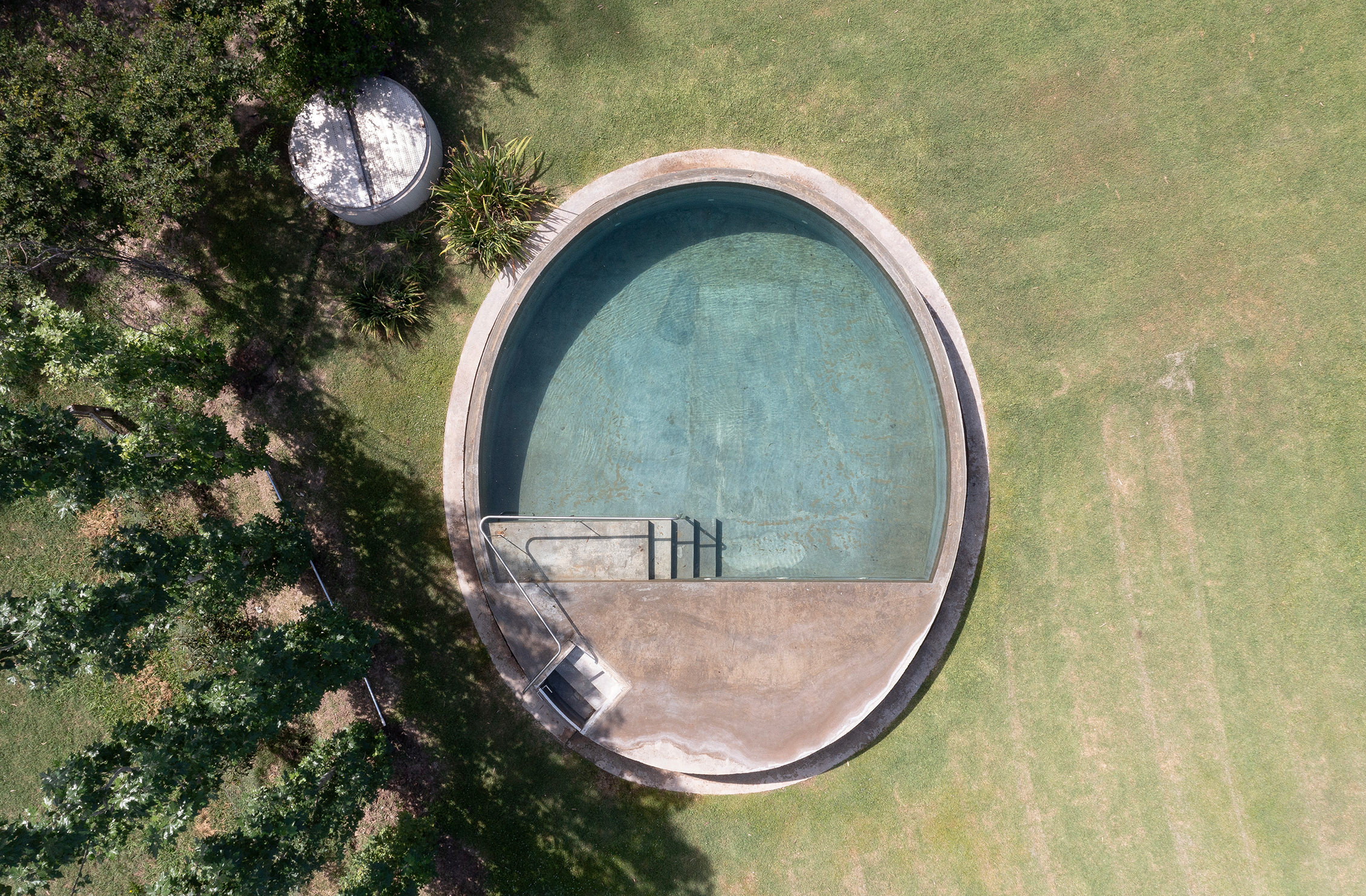
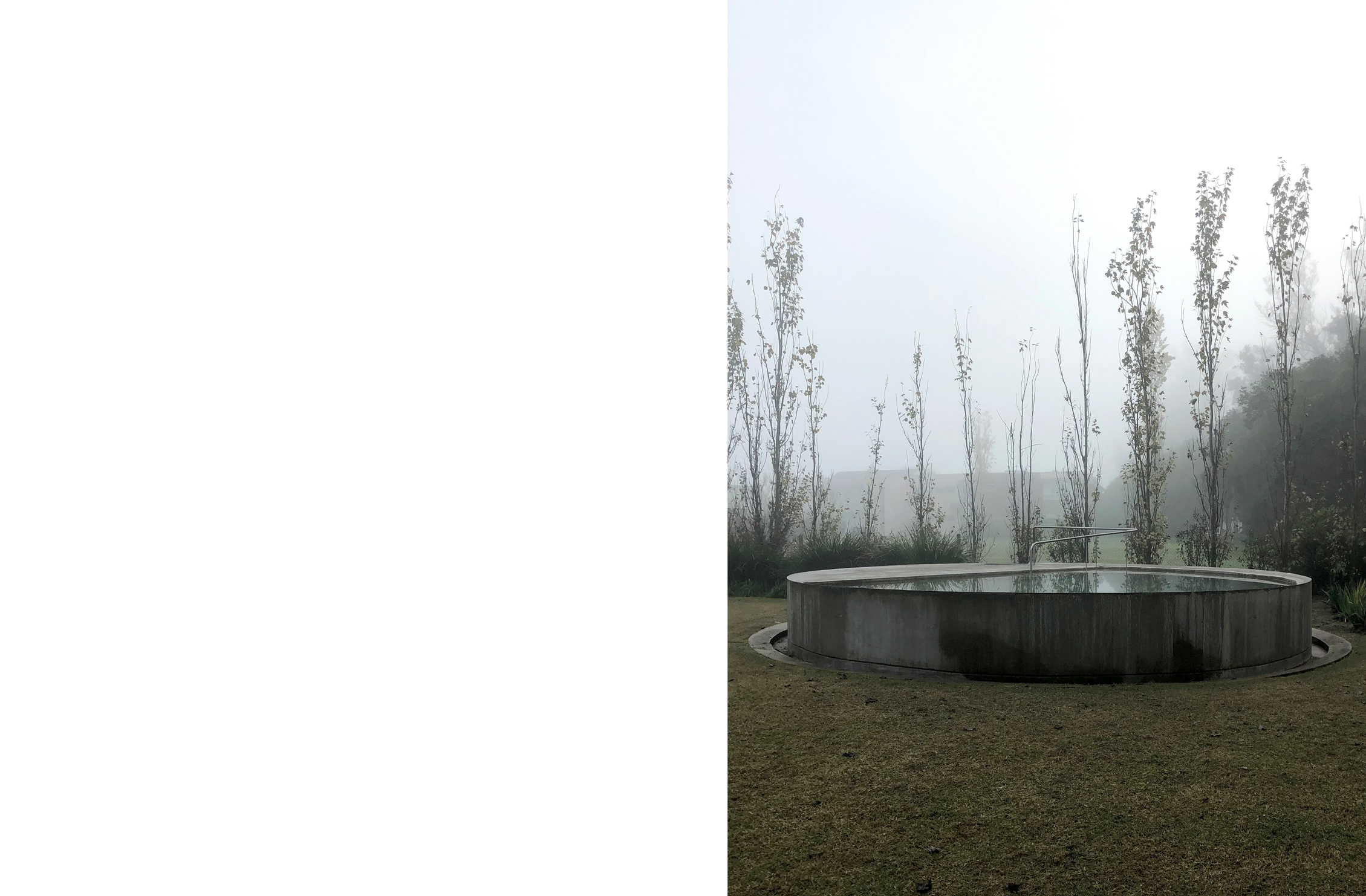
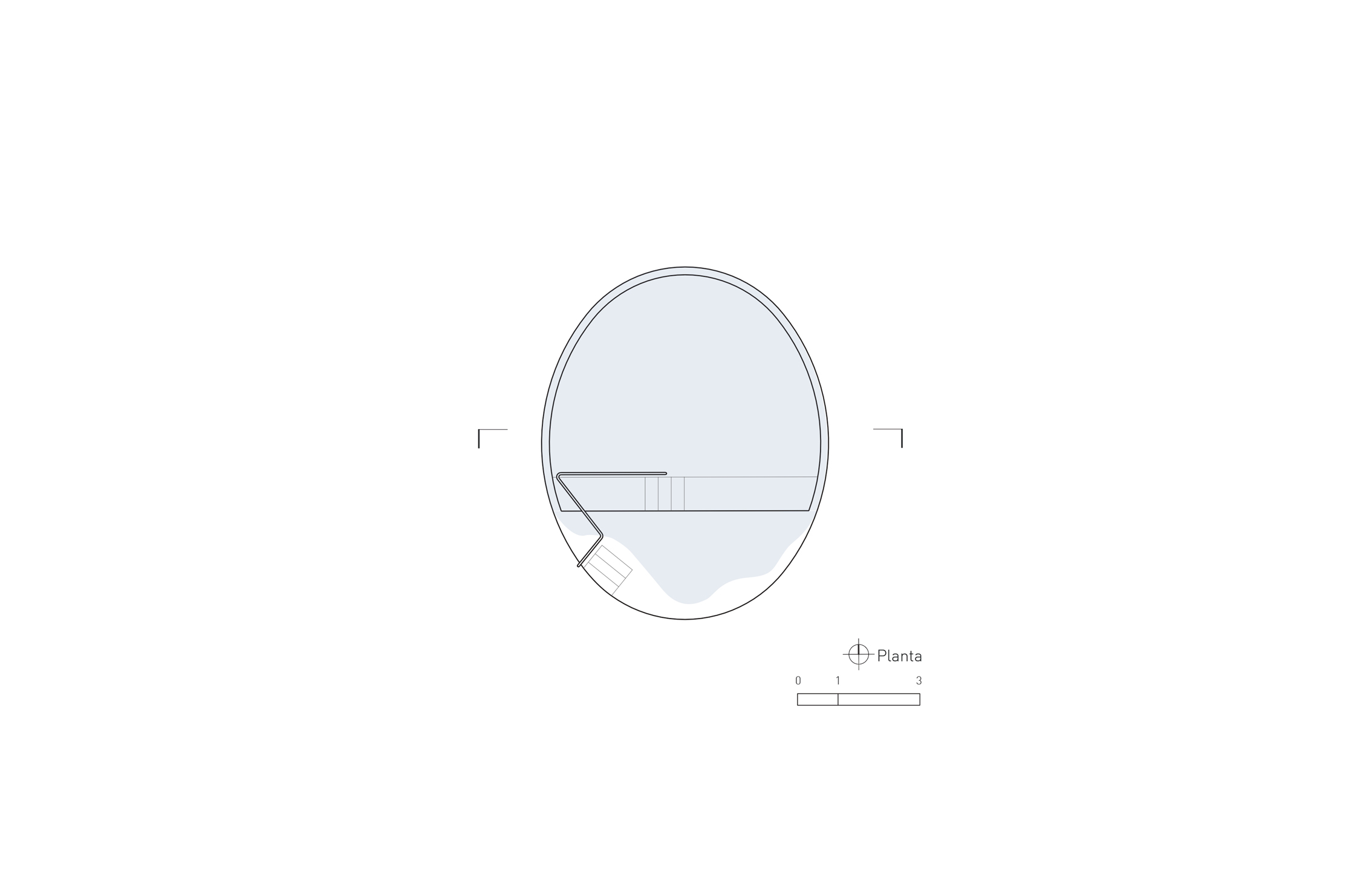
The pool is perceived as an isolated object resting on the ground. Its plan takes the same basic geometry as the house and eliminates any front or back hierarchy. By raising its height and making it accessible via a staircase with a door, the need for the safety fence required by neighborhood regulations is avoided. Viewed up close and from within, the swimmer notices that the water completely fills its form to the edge, dematerializing the mass and transforming it into pure reflection, giving it an abstract and boundless quality. The water regularly overflows the volume and runs down a concrete wall, from where it is collected and filtered by an underground system. In a broader contextual relationship, the pool also relates to the classic Australian water tanks found in rural landscapes.