El Futuro del Agua, Bienal de Venecia, Italia. 2023.
El Futuro del Agua, Bienal de Venecia, Italia. 2023.
El Futuro del Agua, Bienal de Venecia, Italia. 2023.

El Futuro del Agua, Bienal de Venecia, Italia. 2023.
El Futuro del Agua, Bienal de Venecia, Italia. 2023.
El Futuro del Agua, Bienal de Venecia, Italia. 2023.
El Futuro del Agua, Bienal de Venecia, Italia. 2023.
El Futuro del Agua, Bienal de Venecia, Italia. 2023.
El Futuro del Agua, Bienal de Venecia, Italia. 2023.
El Futuro del Agua, Bienal de Venecia, Italia. 2023.
El Futuro del Agua, Bienal de Venecia, Italia. 2023.
El Futuro del Agua, Bienal de Venecia, Italia. 2023.
El Futuro del Agua, Bienal de Venecia, Italia. 2023.
TEXT
Whitin the Laboratory of the Future in Venice, the Argentine pavilion looks into the Future of Water through its present. As we know, water is fundamentally linked to the history of life in the planet.
Life has always depended from water, and its relationships with geography and climate have shaped the characteristics of the biosphere during millions of years.
The future of life on earth will also depend from these relationships: in any of the future scenarios of the planet the role of water will be essential
Water and the human habitat have always defined each other. Our technology and culture have developed throughout the centuries interventions that seek to guarantee its availability and benefits while controlling its negative effects.
Nowadays it is the same human activity which has generated unbalances and excesses:
the future availability of fresh water, the capability of rivers and oceans to absorb waste, or the eventual raise of the sea levels are issues that can drastically affect life on the planet.
The exhibition presents the multiple facets and scales of water across the country. By making visible the hydric resources and our behaviors and actions around it, we will be able to better interpretate our relationship with water and promote reflection regarding future actions.
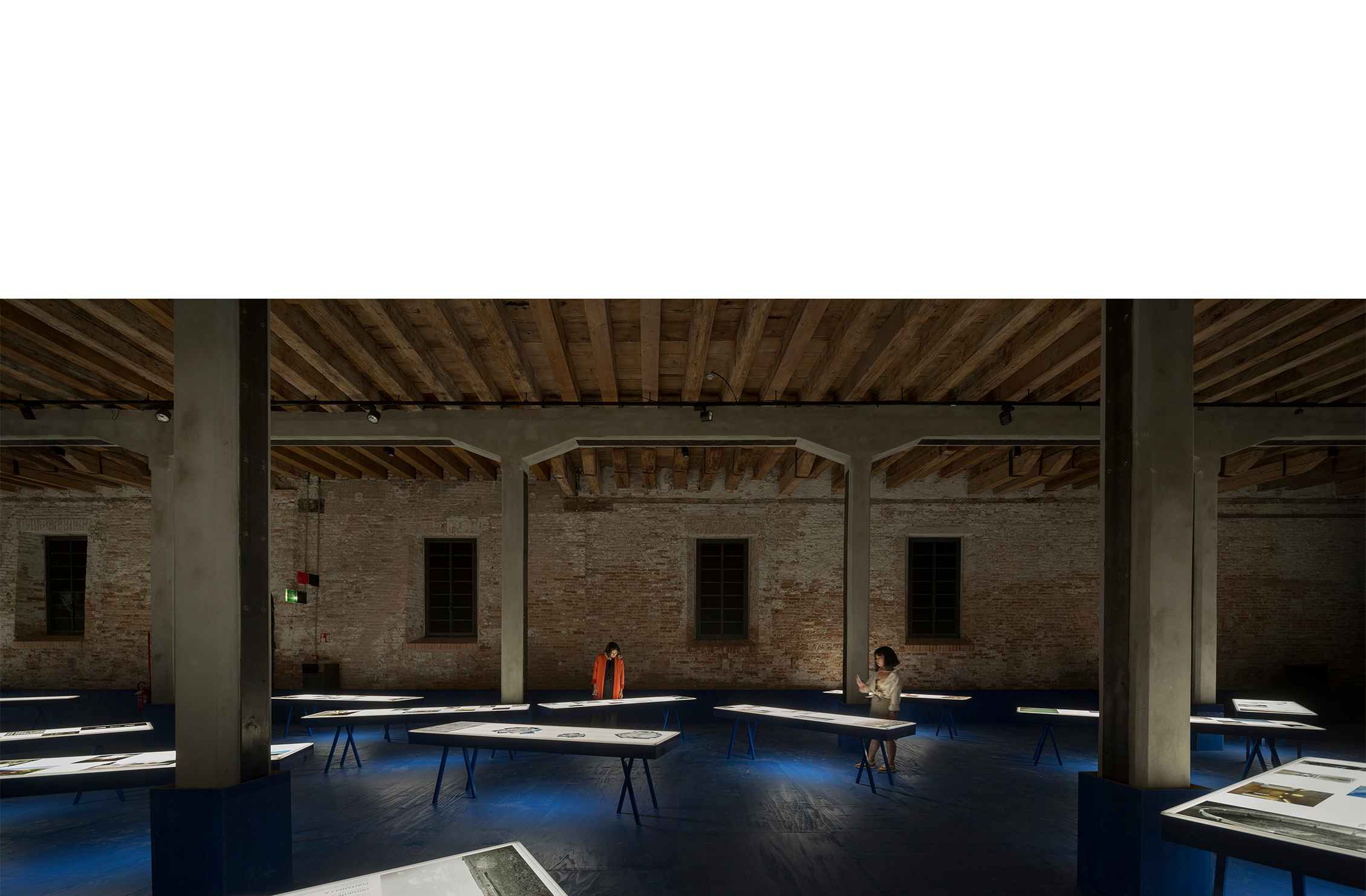
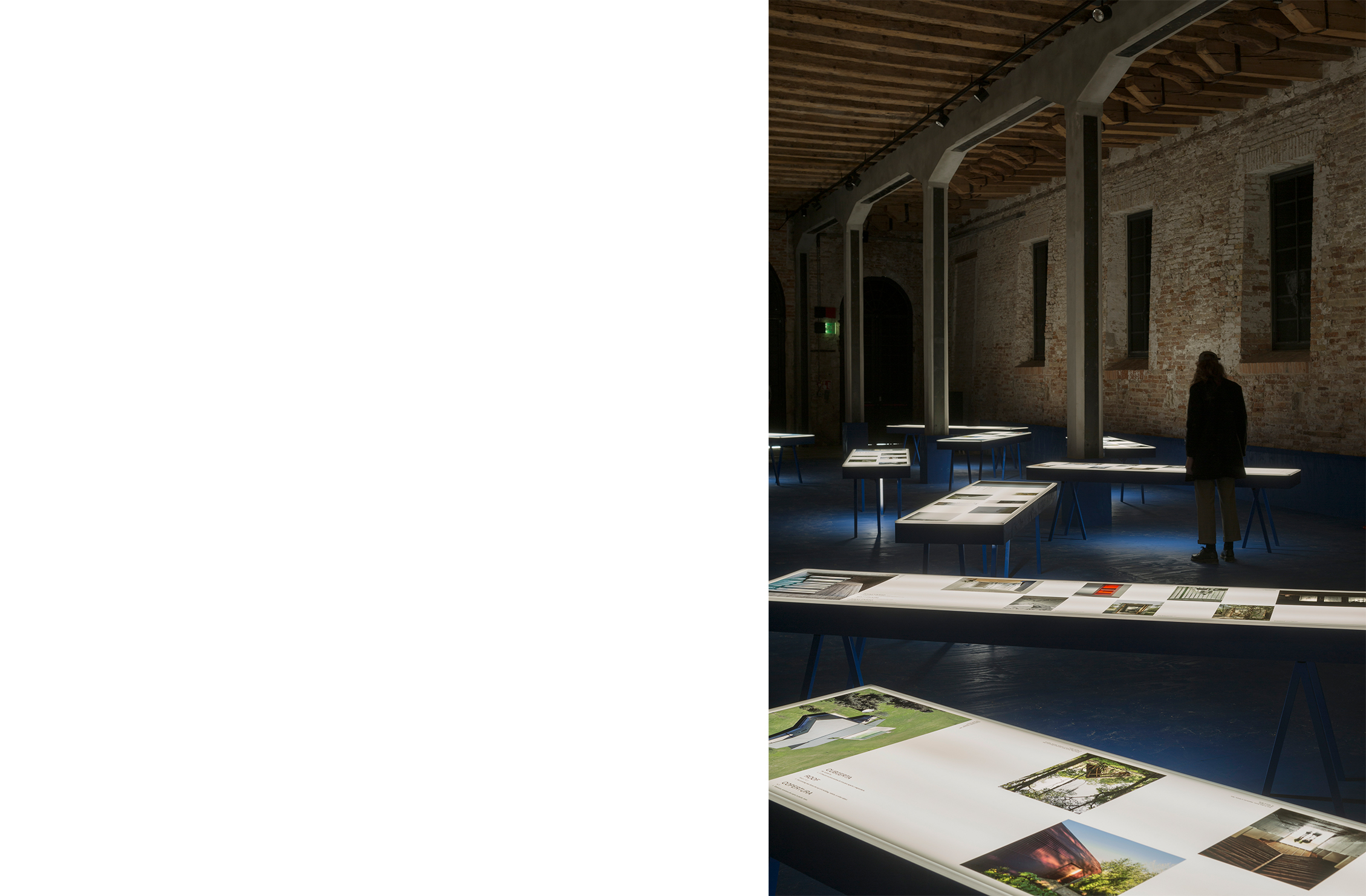
As we enter the pavilion we find ourselves surrounded by a serene atmosphere, slightly surreal, that detaches itself from the exterior. We realize that a blue fluid has flooded the bottom part of the Pavilion, while upper part remains intact. This “fluid” is not a literal liquid, but a single color that covers it all up to a perfectly horizontal level of 70 cm of height.
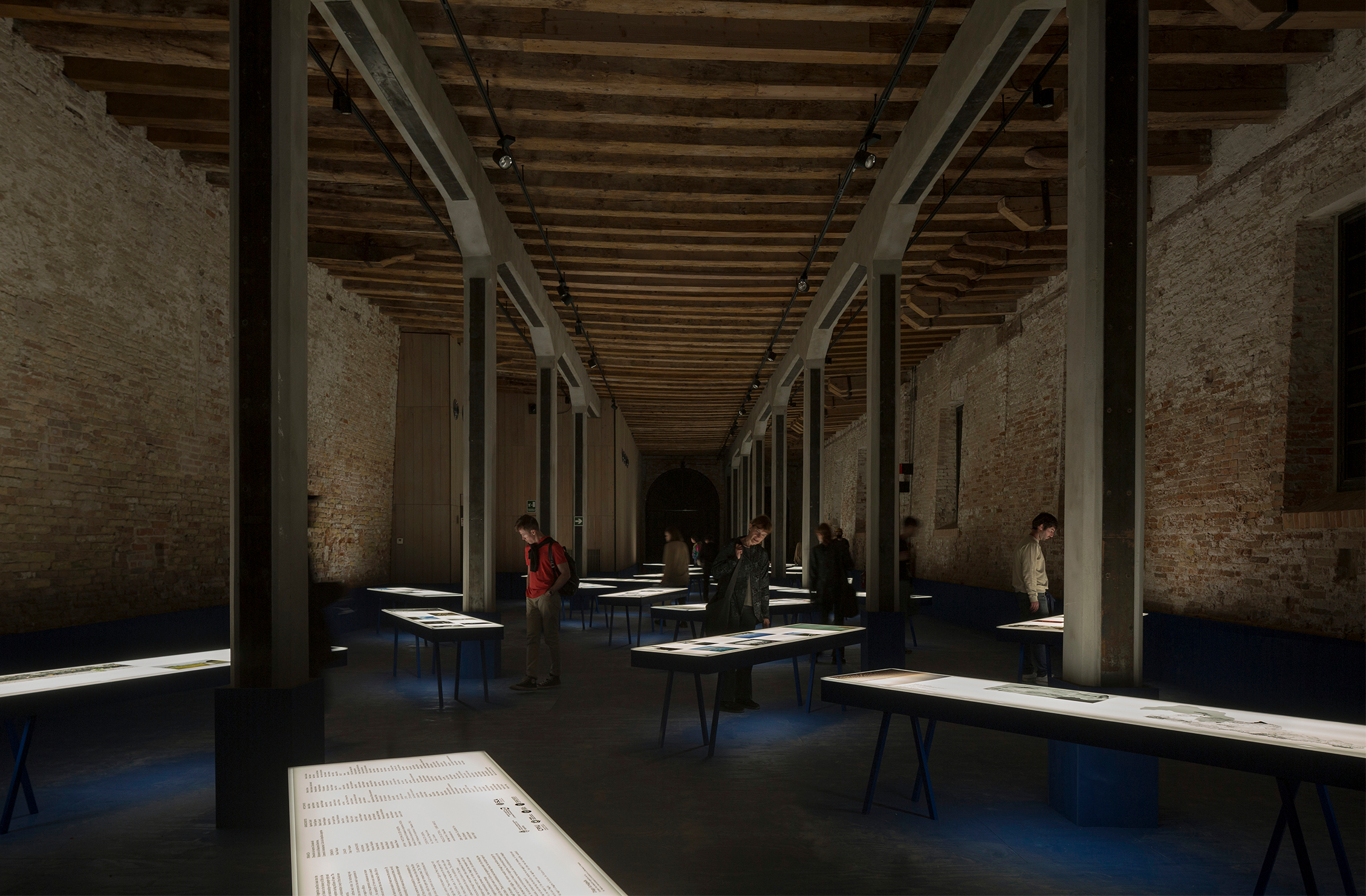
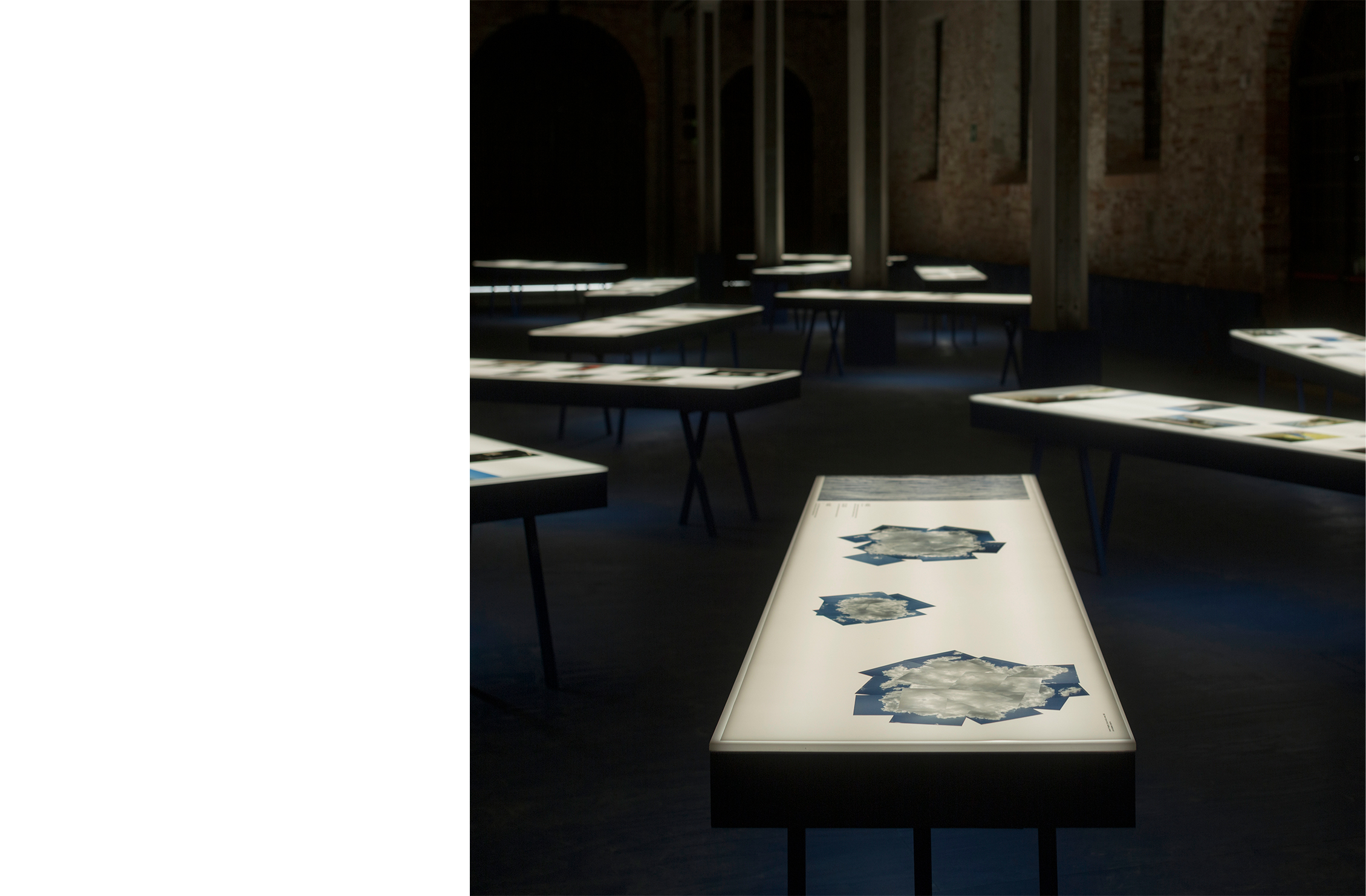
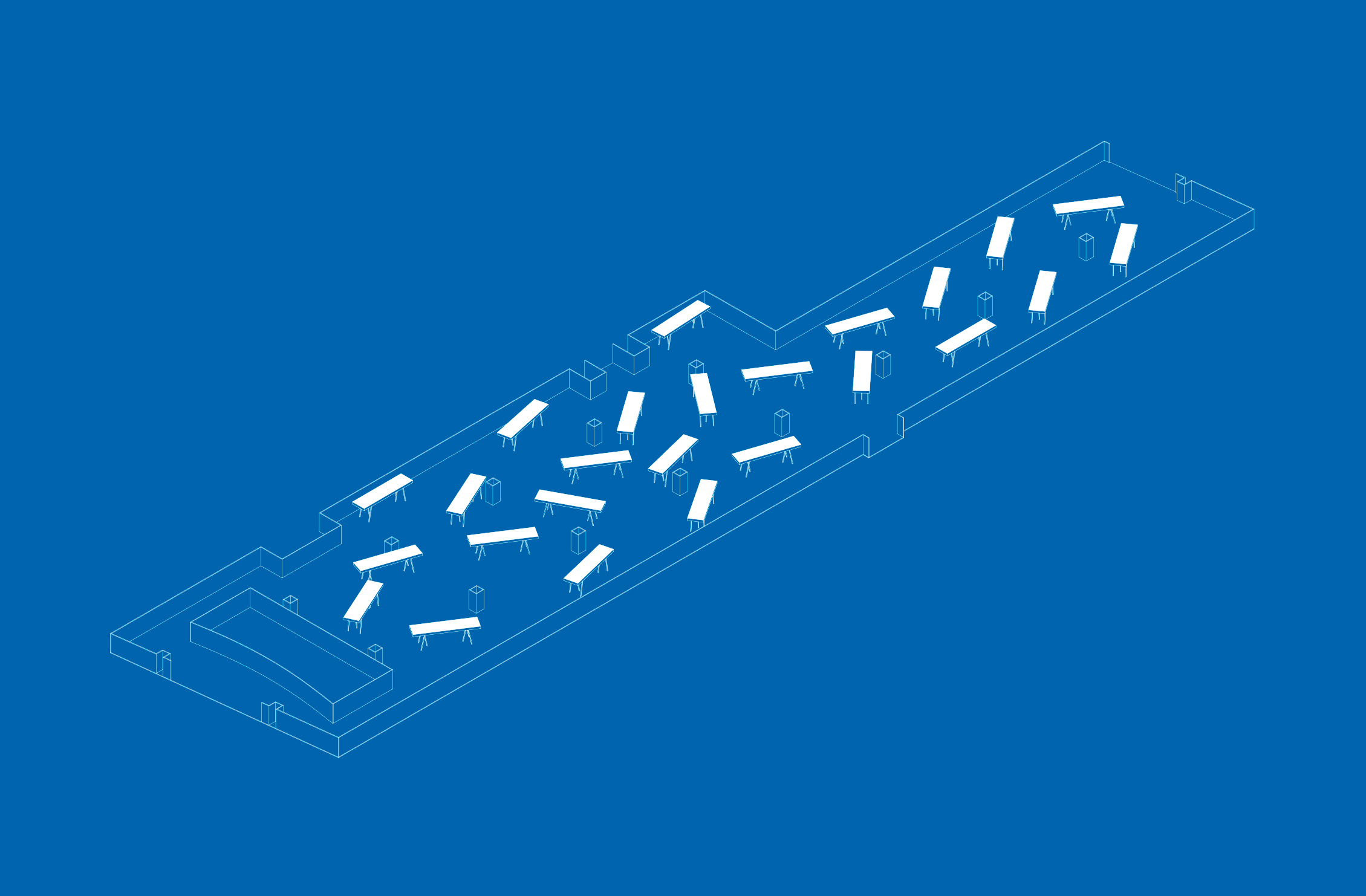
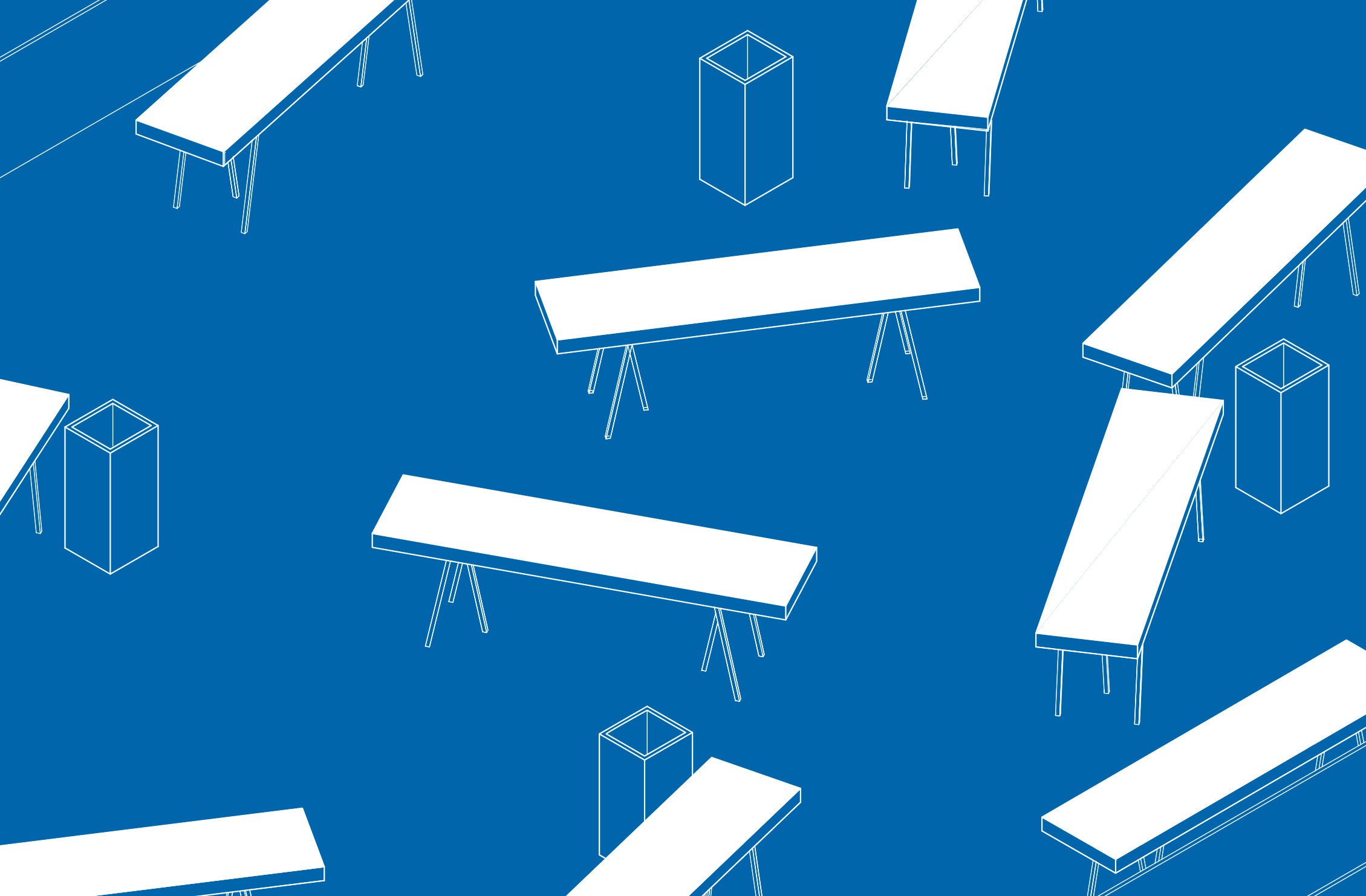
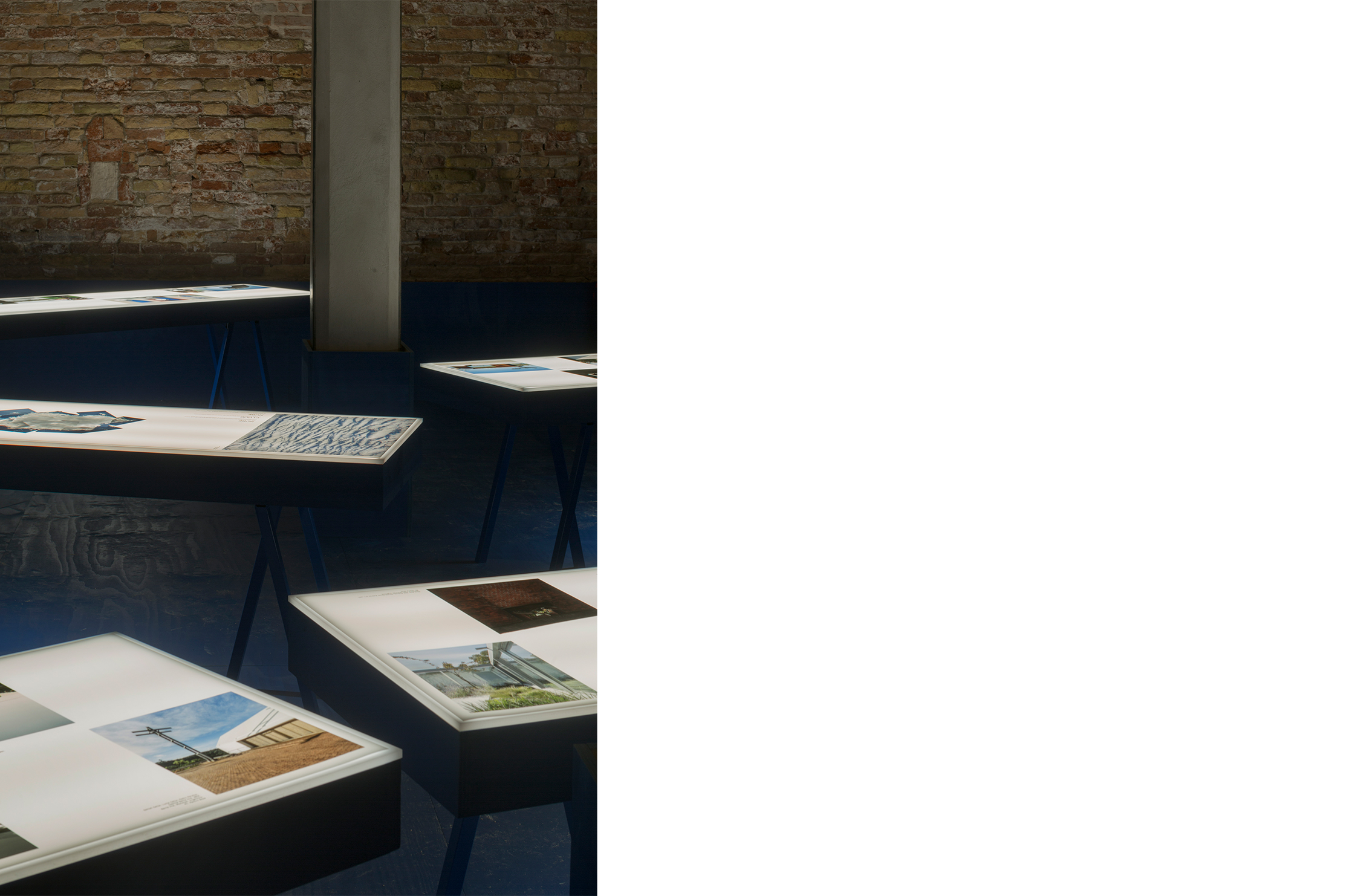
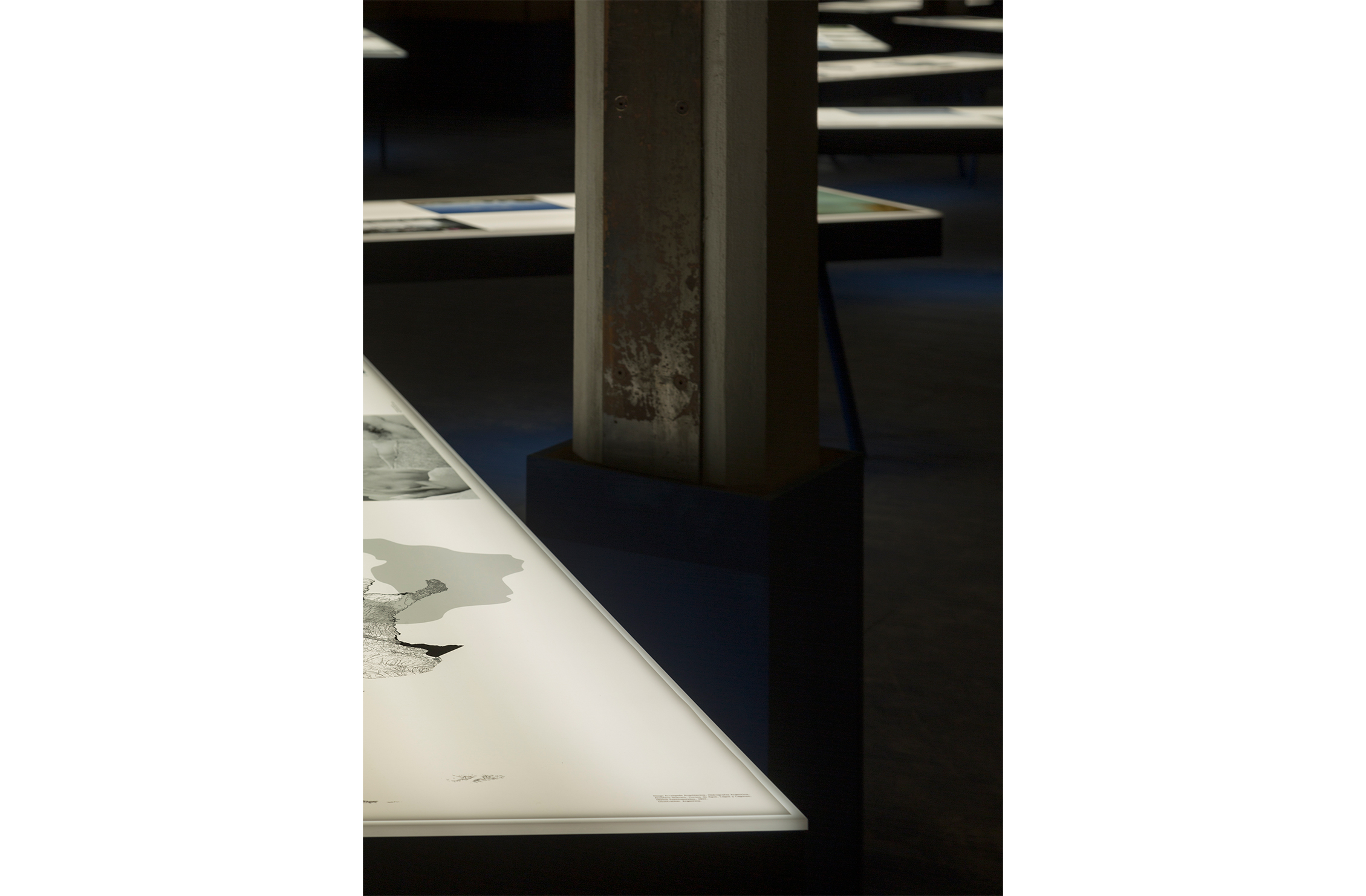
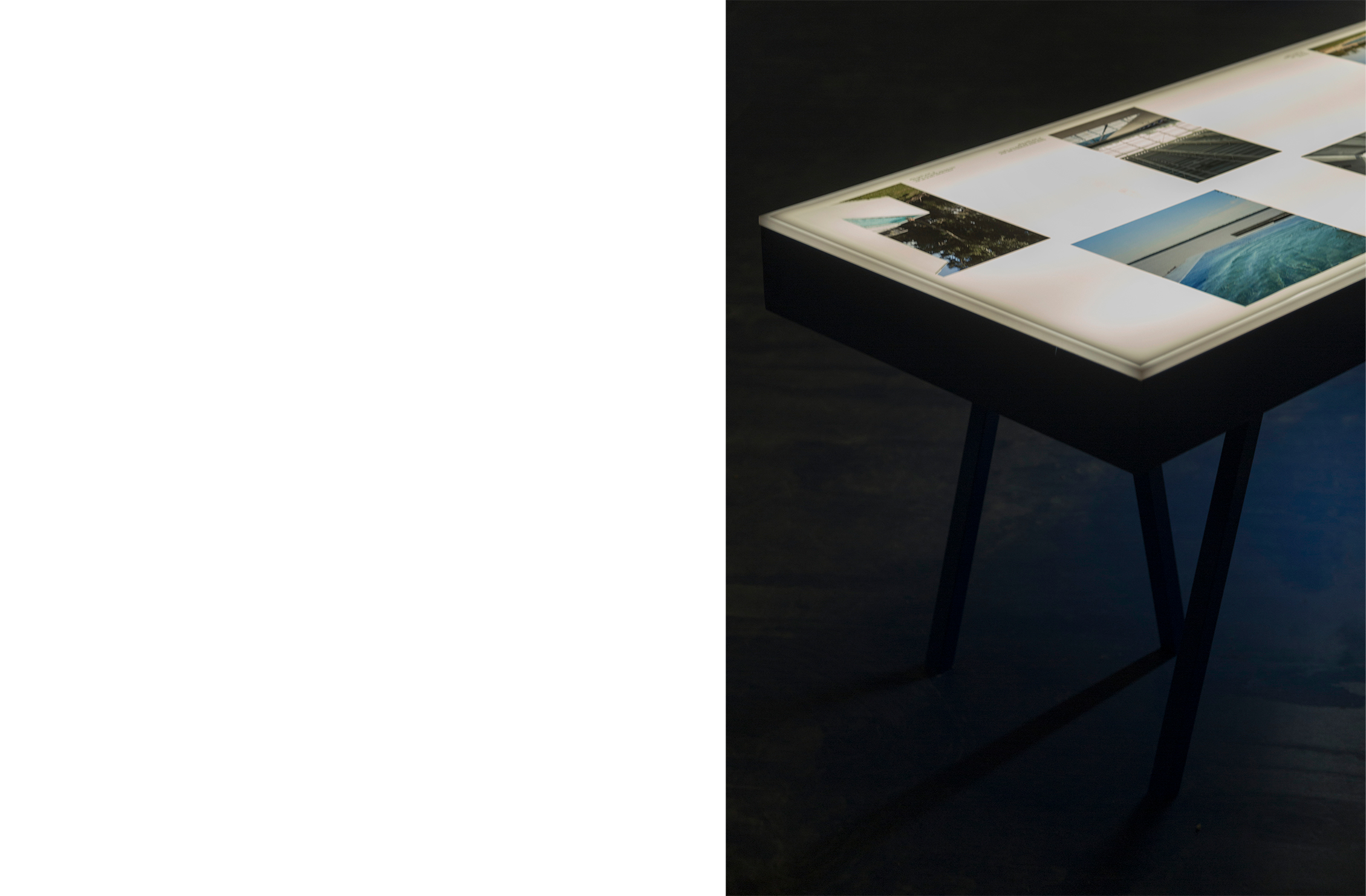
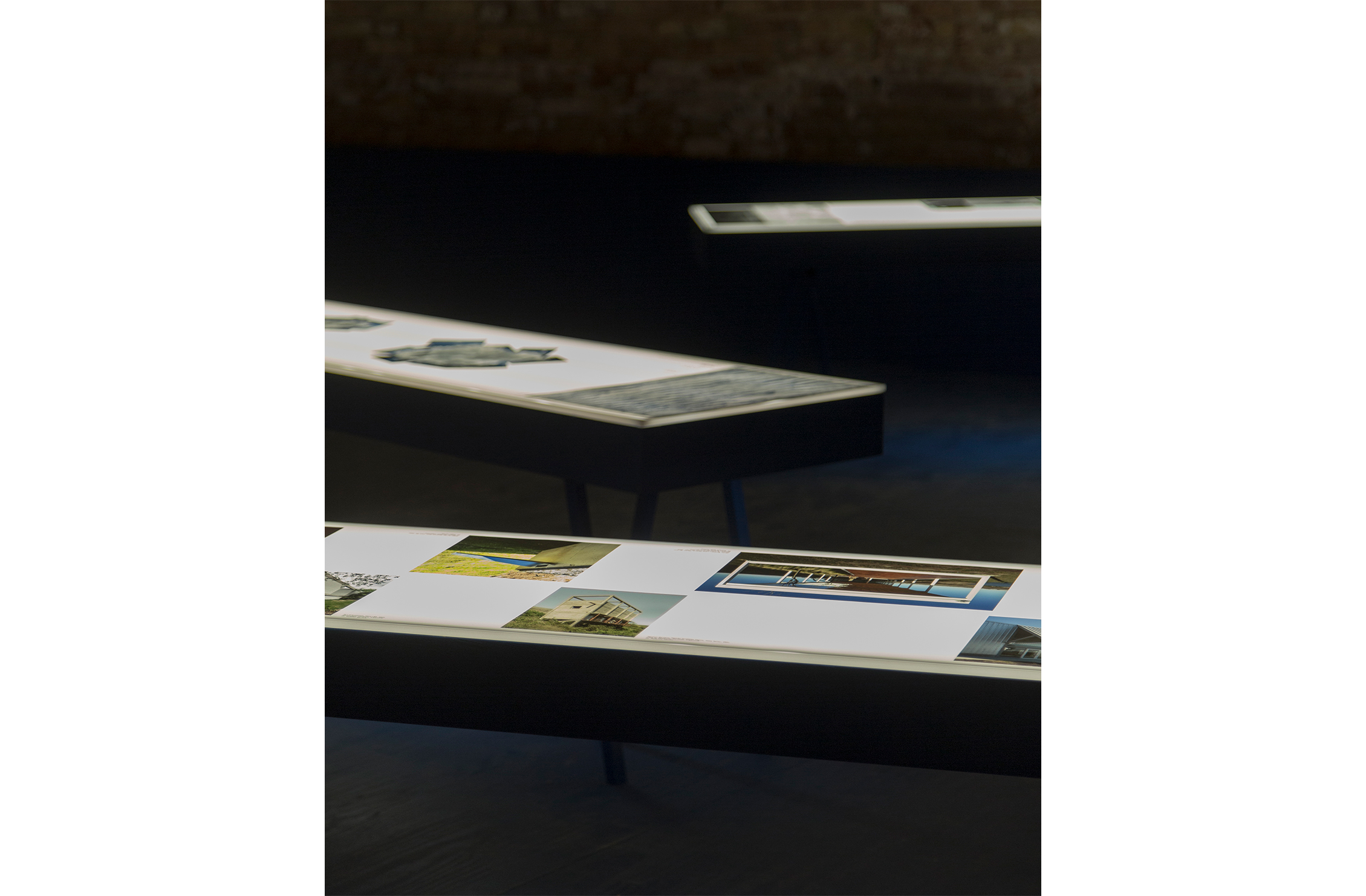
Above this intangible liquid, a series of white planes of light are freely arranged, with the typical disorder of things that float. These white rectangles are the upper part of big light tables, like the ones found in photo labs, or like tracing tables. Above them, slides with images arranged by theme present the content of the exhibition. The diffuse light that bathes the whole space accentuates the liquid illusion of the place.
The exhibition is structured through a water glossary that comprises all the scales of water.
Each table displays a glossary entry and, on them, images that resonate with the term are arranged. New relationships between water, the territory, the cities and a selection of recent Argentine architectures emerge.
The themes and the tables don’t seem to follow any apparent order: the flooding has moved and mixed them. There is no established path among them, but multiple ways of moving, circulate, go forwards or backwards.
With water up to their thighs, the visitors wander through the pavilion and get immersed into the past and the present of water in Argentina, its terms and presence in the landscape, its cultural and environmental relevance, and the architectures and designs that modulate, contain and channel it.
Going out and leaving the pavilion behind we are again in the Arsenal, in Venice and the water of the canals and the lagoon, this time actual and tangible, suddenly powerful and fragile.
We begin to imagine its future, the Future of Water.
TEAM
Curador Diego Arraigada Colaboradores Sofía Rothman Paula Pasquinelli Francisco Falabella Tomás Marciali Nicolás Alvarez Manuel Bianchi Facundo Spina Sebastian Pisano