
Pabellón Argentino en Buenos Aires. Buenos Aires, Argentina. 2019
Pabellón Argentino en Buenos Aires. Buenos Aires, Argentina. 2019
Pabellón Argentino en Buenos Aires. Buenos Aires, Argentina. 2019
Pabellón Argentino en Buenos Aires. Buenos Aires, Argentina. 2019
Pabellón Argentino en Buenos Aires. Buenos Aires, Argentina. 2019
Pabellón Argentino en Buenos Aires. Buenos Aires, Argentina. 2019
Pabellón Argentino en Buenos Aires. Buenos Aires, Argentina. 2019
Pabellón Argentino en Buenos Aires. Buenos Aires, Argentina. 2019

Pabellón Argentino en Buenos Aires. Buenos Aires, Argentina. 2019
Concurso Pabellón Argentino en Buenos Aires. Buenos Aires, Argentina. 2019
Pabellón Argentino en Buenos Aires. Buenos Aires, Argentina. 2019
Pabellón Argentino en Buenos Aires. Buenos Aires, Argentina. 2019
Pabellón Argentino en Buenos Aires. Buenos Aires, Argentina. 2019
TEXT
Silo
Identity
There is a revealing uncertainty in the creative impulse that drives us to do things differently. Within the Argentine landscape, there is a simplicity and silence that deserve contemplation.
The Argentine Pavilion for Expo 2023 is conceived as a great container for the creative industries. The defining identity of this container, and its relationship to the context of a country, is based on an iconic image of Argentina: the large agro-industrial silo, that utilitarian, monumental, and ubiquitous presence that synthesizes much of the singularity of our cultural and productive landscape. Its particular beauty lies in being exactly what it is: rigorous and honest structures.
From the world’s granary to a technological seedbed
We produce food for four hundred million people, but we are also producers of software, nuclear reactors, helicopters, biotechnology, and video games: this building symbolizes that transformation and that facet of our country.
To enter into the adventure of the landscape means looking closely at the ground, and then raising one’s head to look toward the infinite sky. The horizon enters the project to mark the meeting point between what is near and what is infinite.
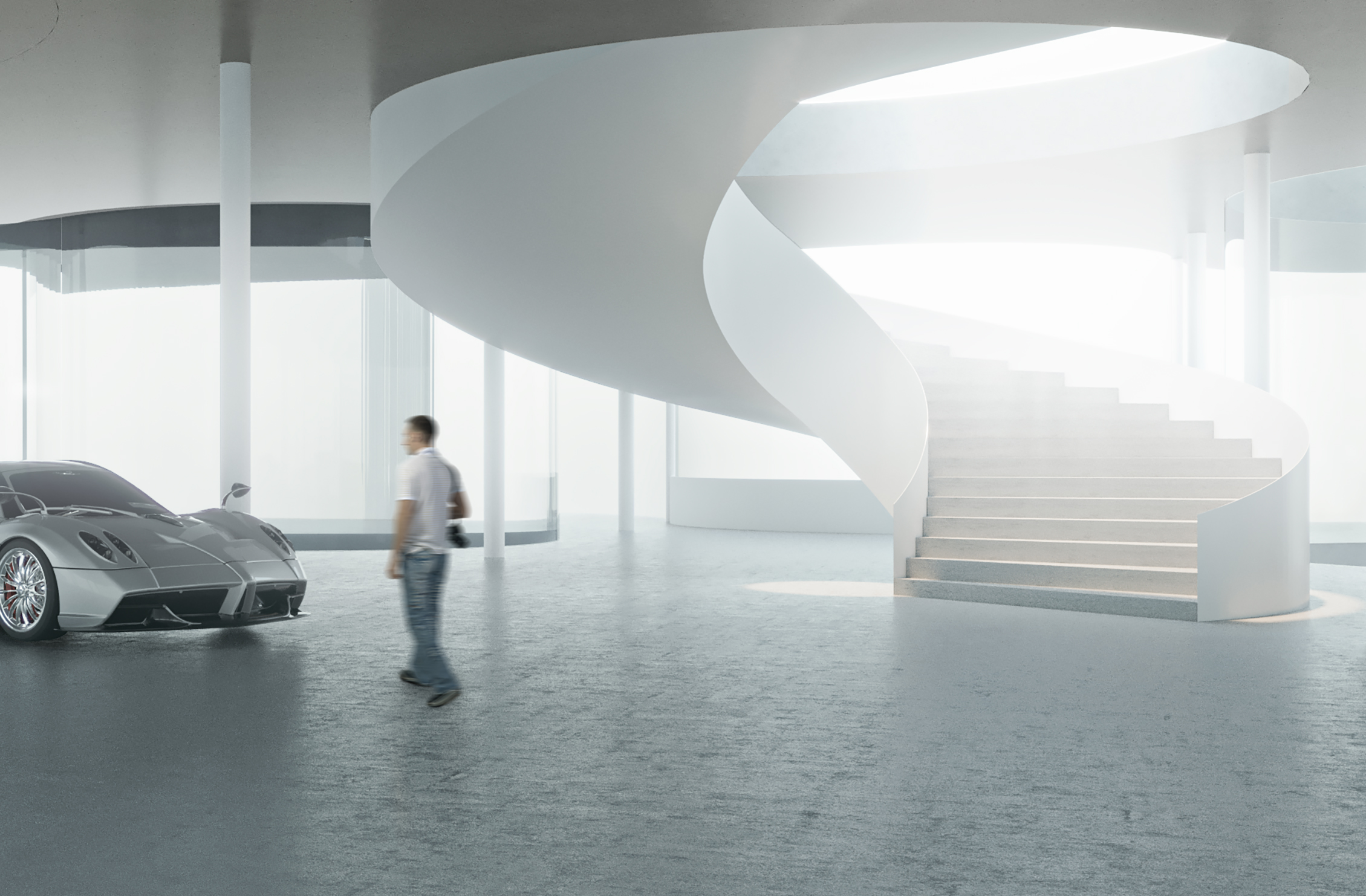
While the traditional silos and grain elevators of our landscape appear opaque and inaccessible, the new pavilion is a light and translucent silo, inviting visitors to discover both it and its contents.
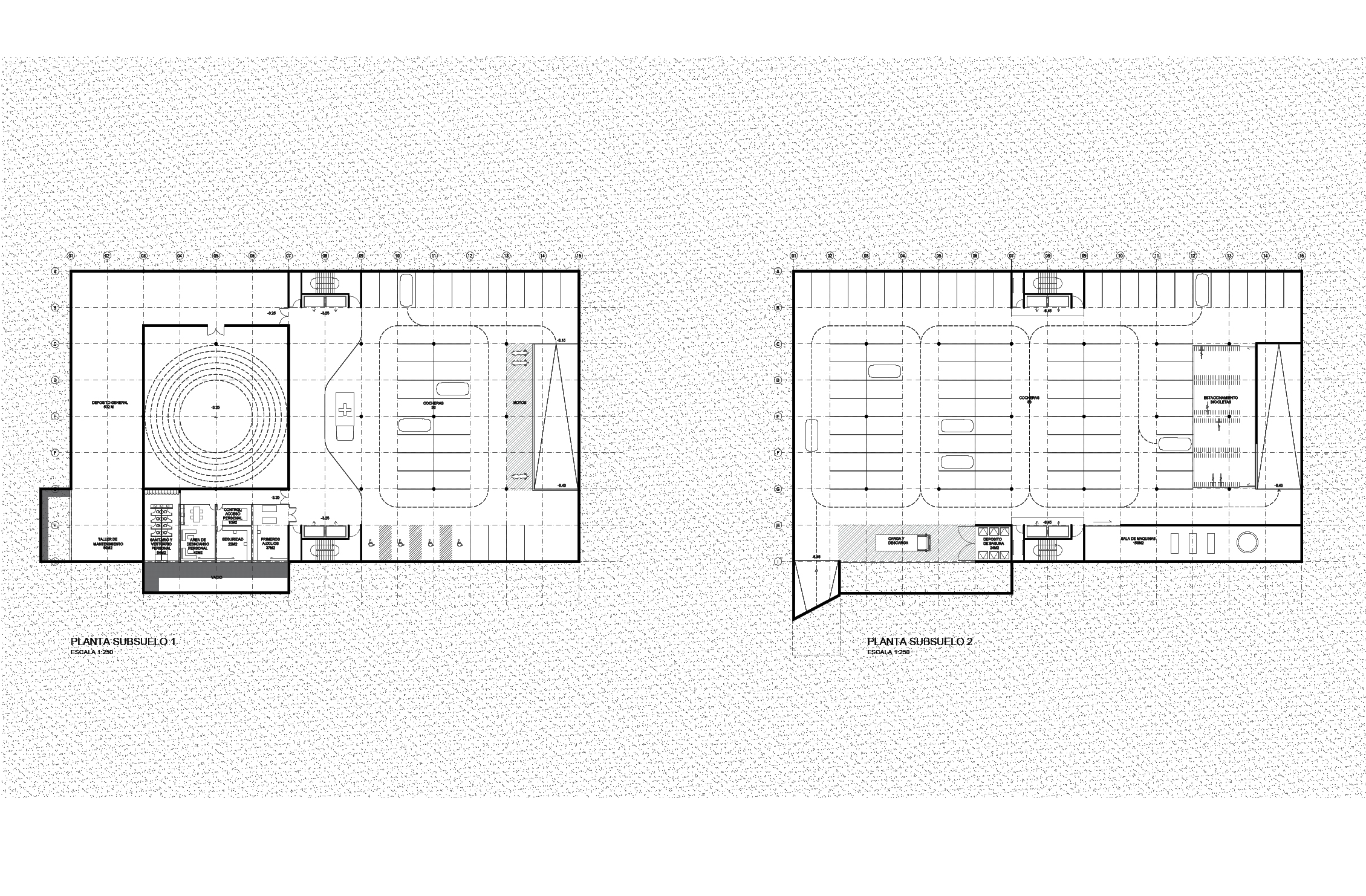
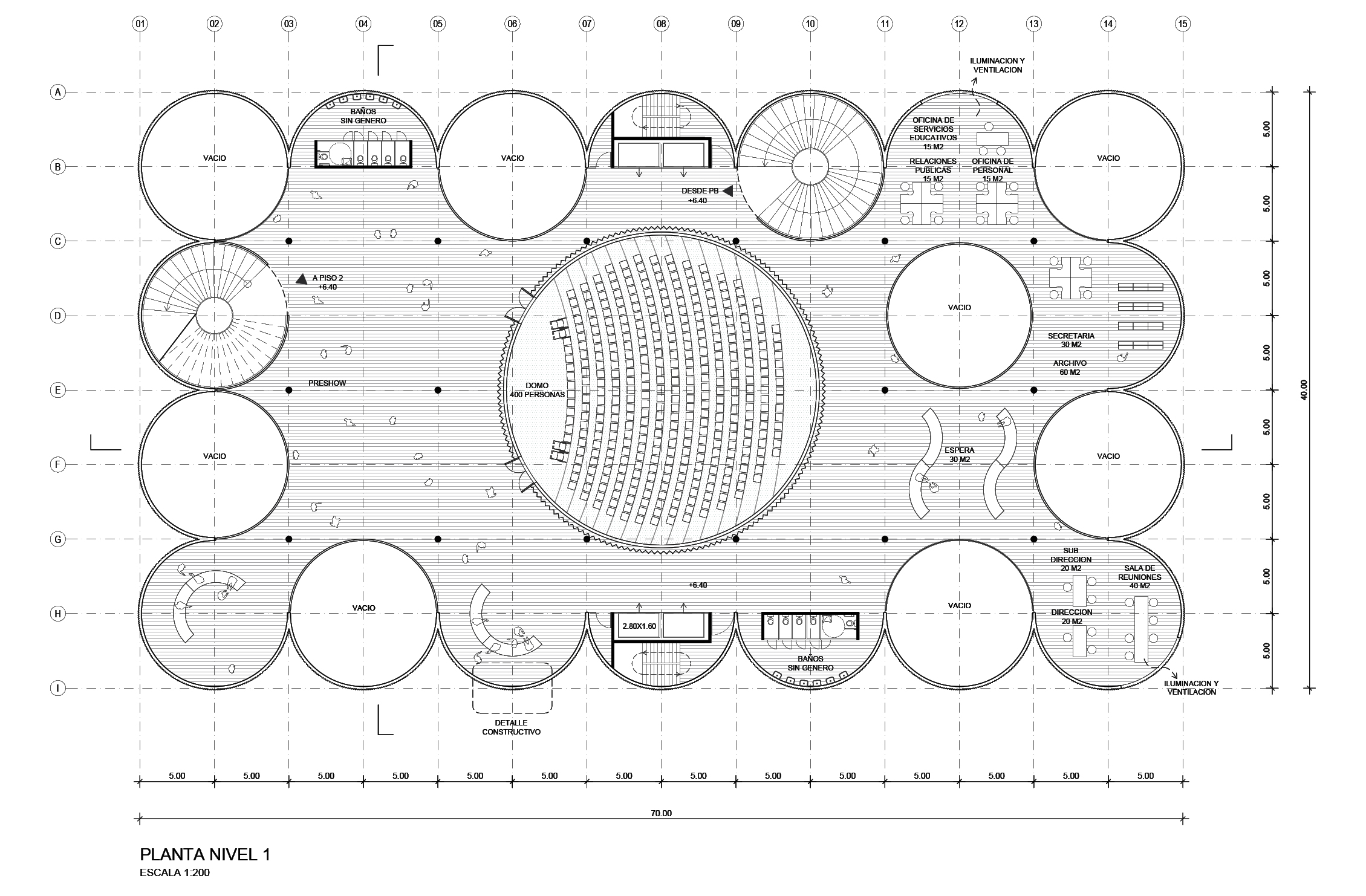
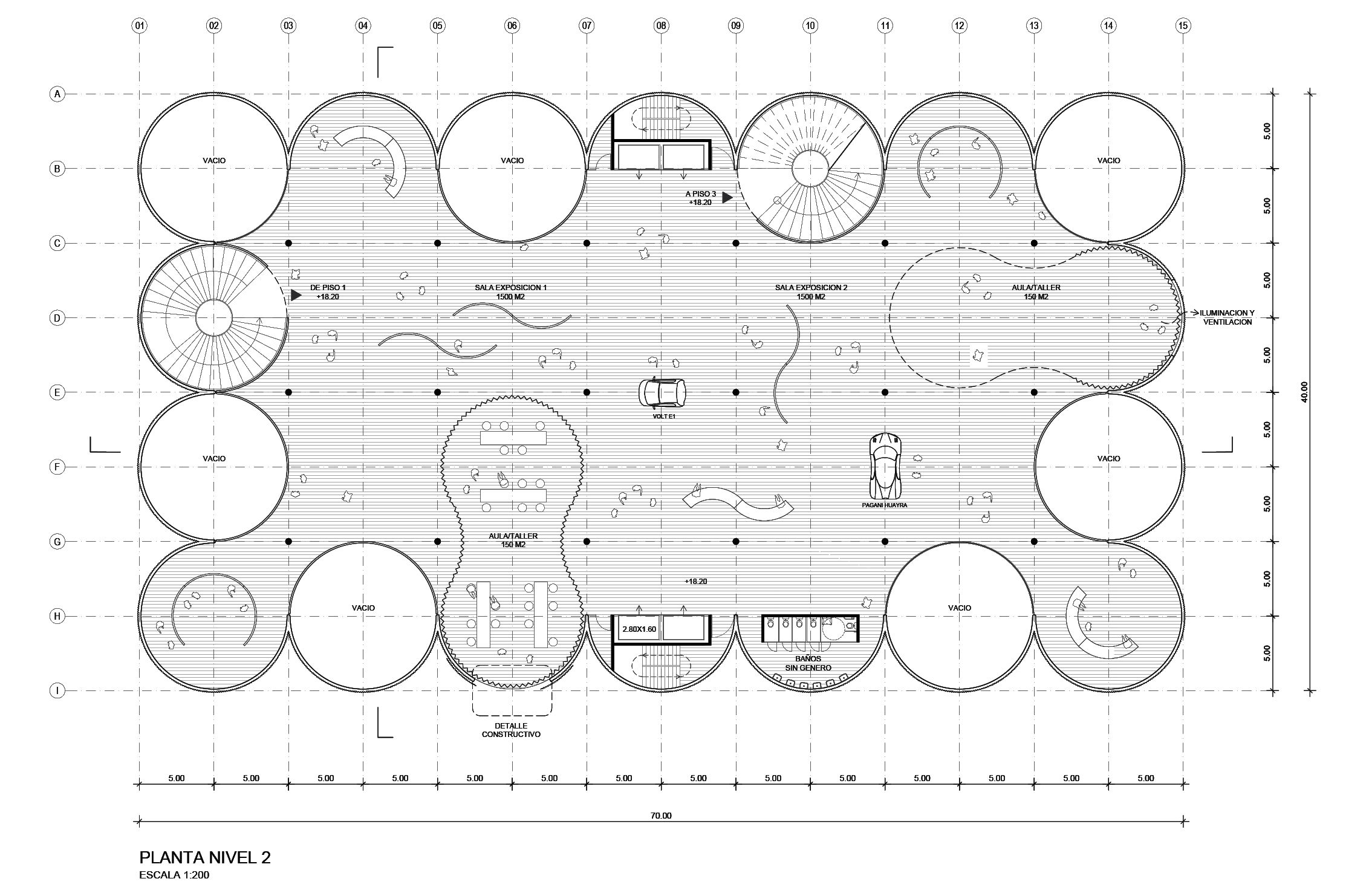
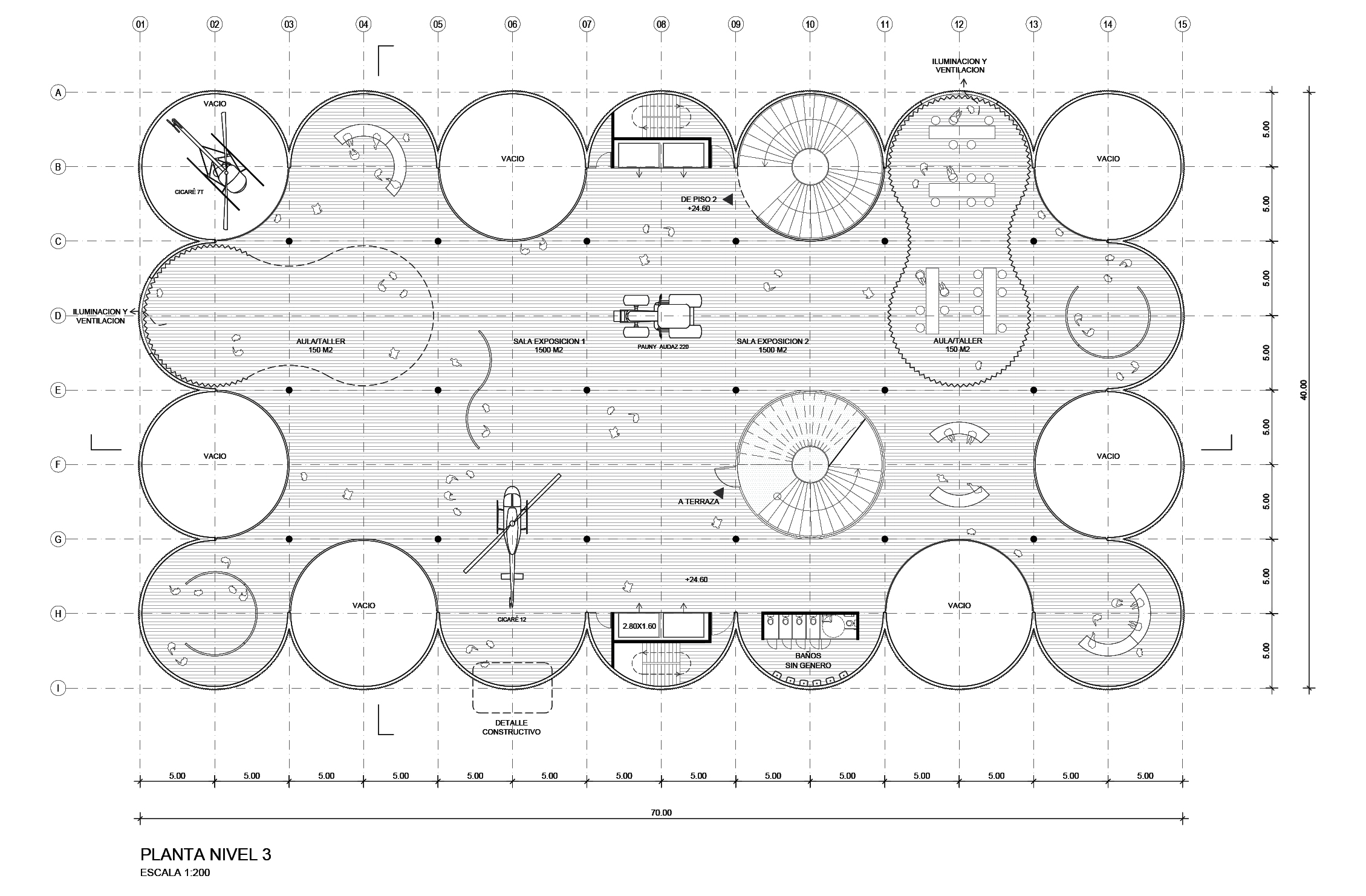
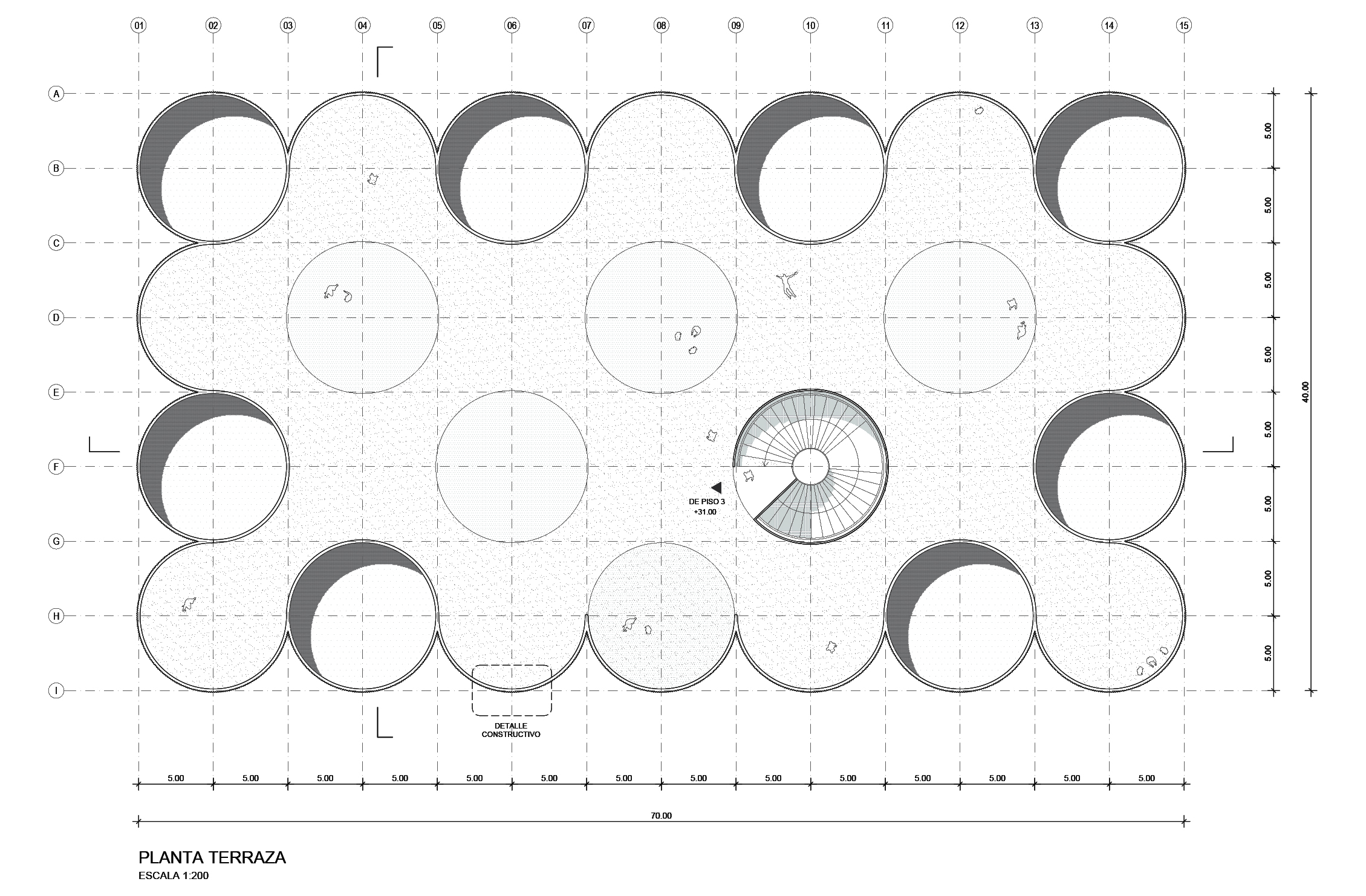
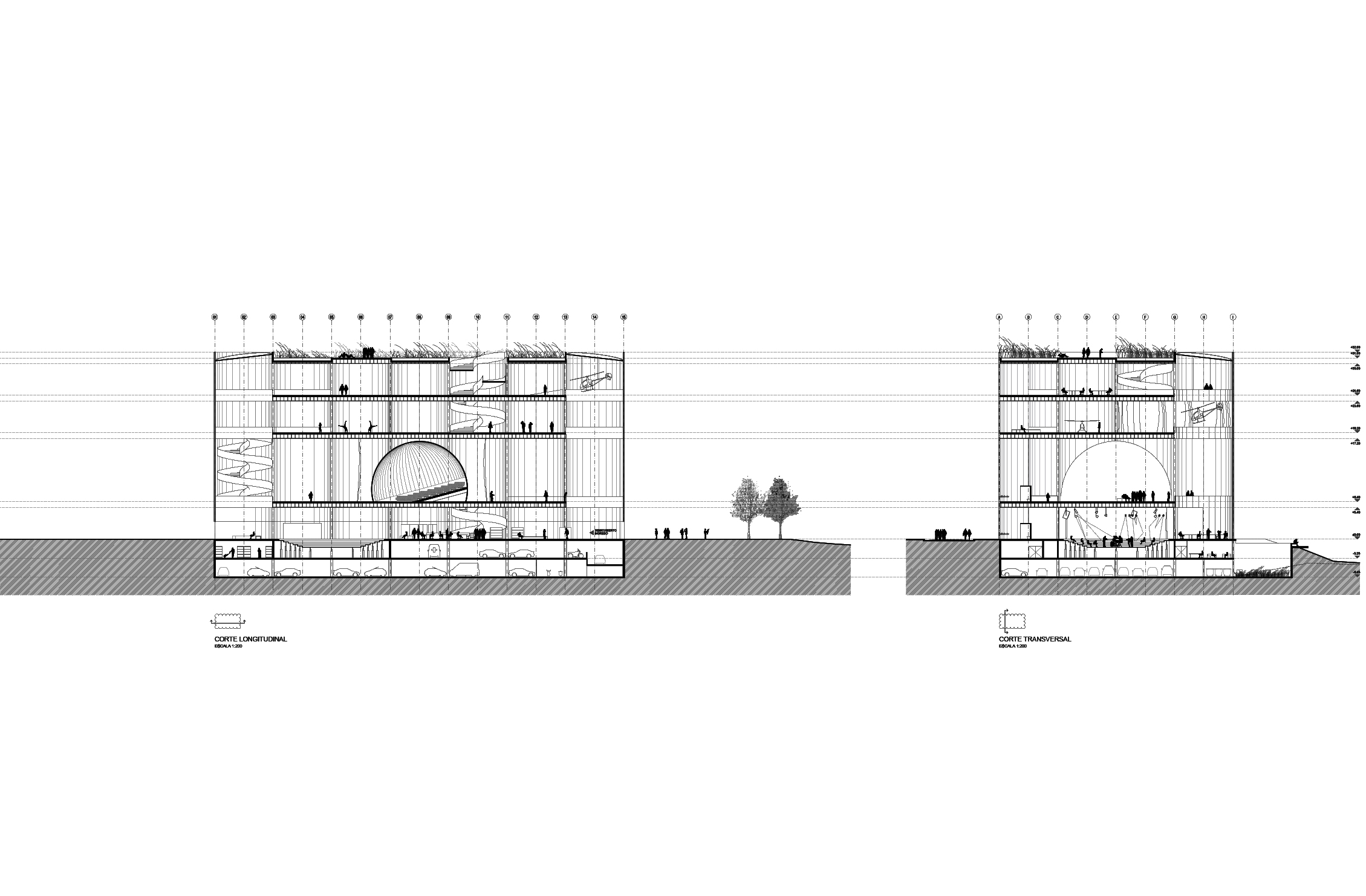
Its plan is a dimensional and structural matrix of circular modules with steel columns in their quadrants, generating a rhythmic spatial order throughout the whole complex, as precise in its definition as it is flexible in its uses. The interior space is a single open and unobstructed support for multiple activities, and the different levels are all interconnected through a system of alternating voids in the concrete slabs.
The interior subdivisions are conceived as lightweight and flexible elements that, within the organizational matrix, allow spatial differentiation while maintaining the rigor of the structural support. Both the auditorium and the immersive projection room are conceived under this same condition.
This quality also allows the pavilion to respond easily and favorably to possible future changes.
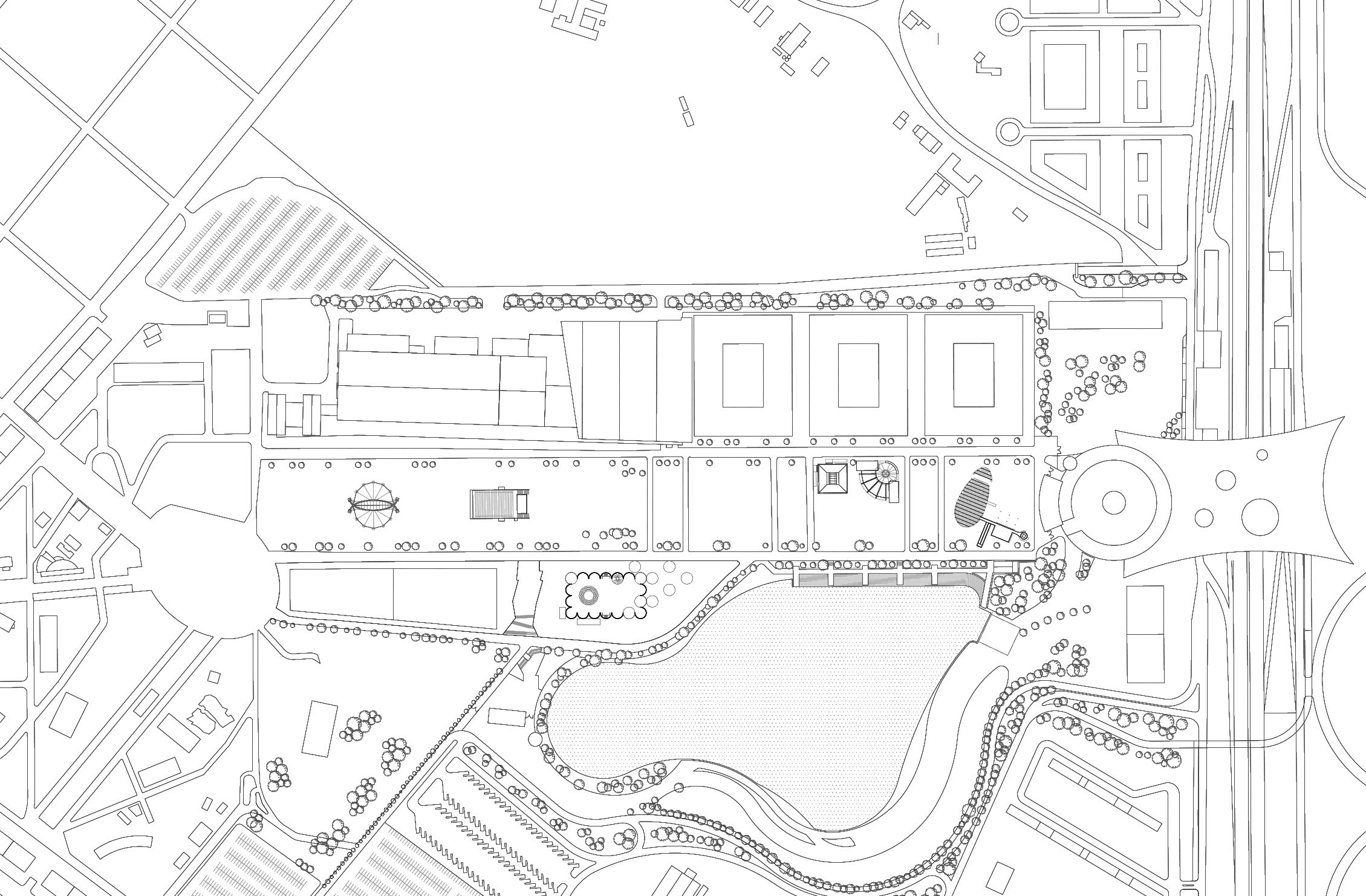
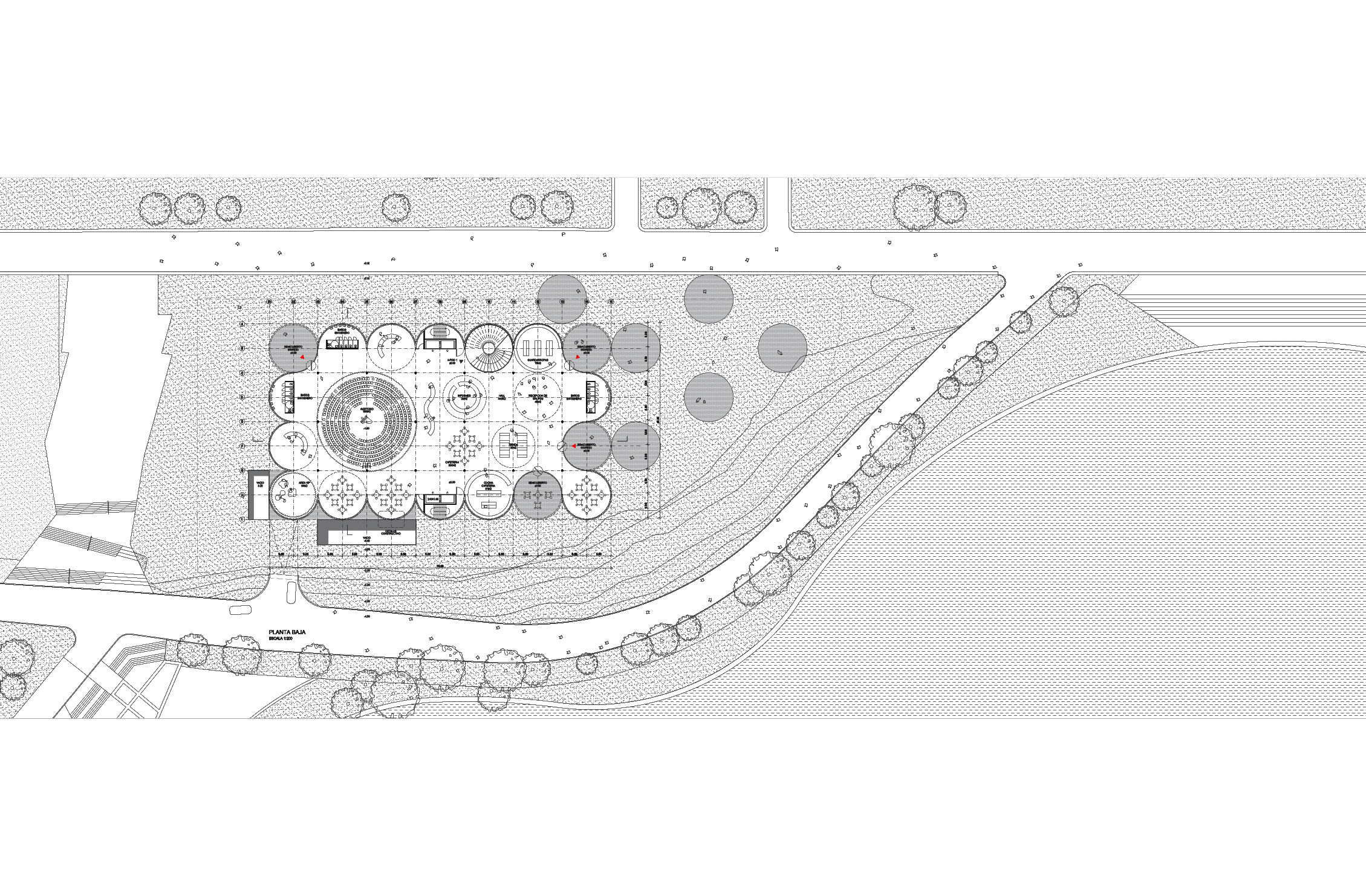
The decision to create a vertical building frees up park space and public ground-level areas, while also giving the structure greater perspective. It is a building that does not occupy everything, but instead liberates space and aspires upward.
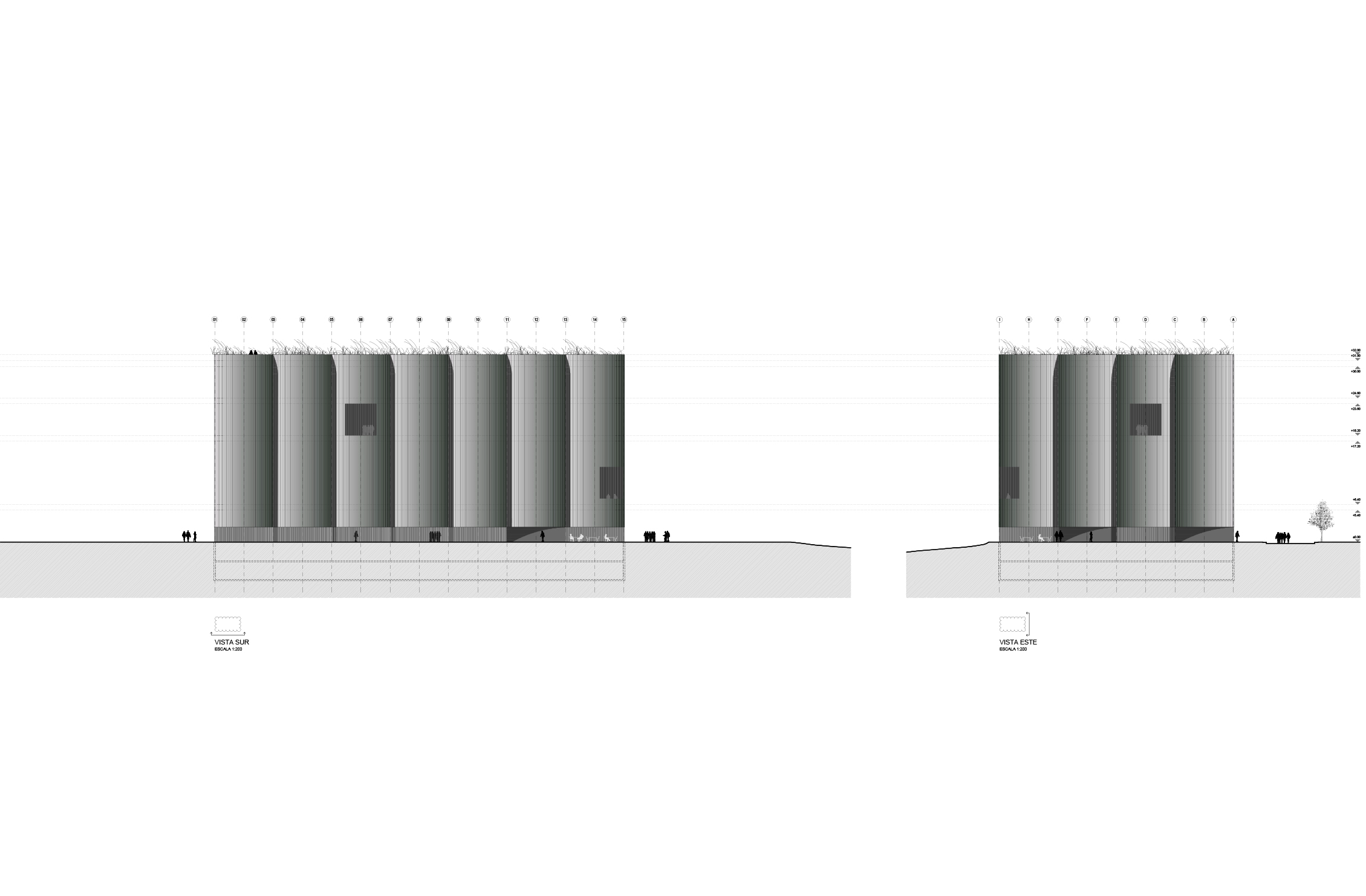
The building envelope repeats the profile of the floor plan and maintains the characteristic cushioned profile of large silos. Materially, the façades are conceived as an integrated and generic solution: a translucent double skin that diffuses light, with some balcony areas and transparent sections where interior activities require them.
The exterior layer consists of a ventilated façade made of translucent corrugated polycarbonate, while the interior layer is composed of a double-wall solar-control polycarbonate system with UV-resistant outer faces and a low solar factor. This creates a soft, even lighting atmosphere for galleries, workshops, and common areas, while also ensuring comfort and energy efficiency throughout the interior spaces.
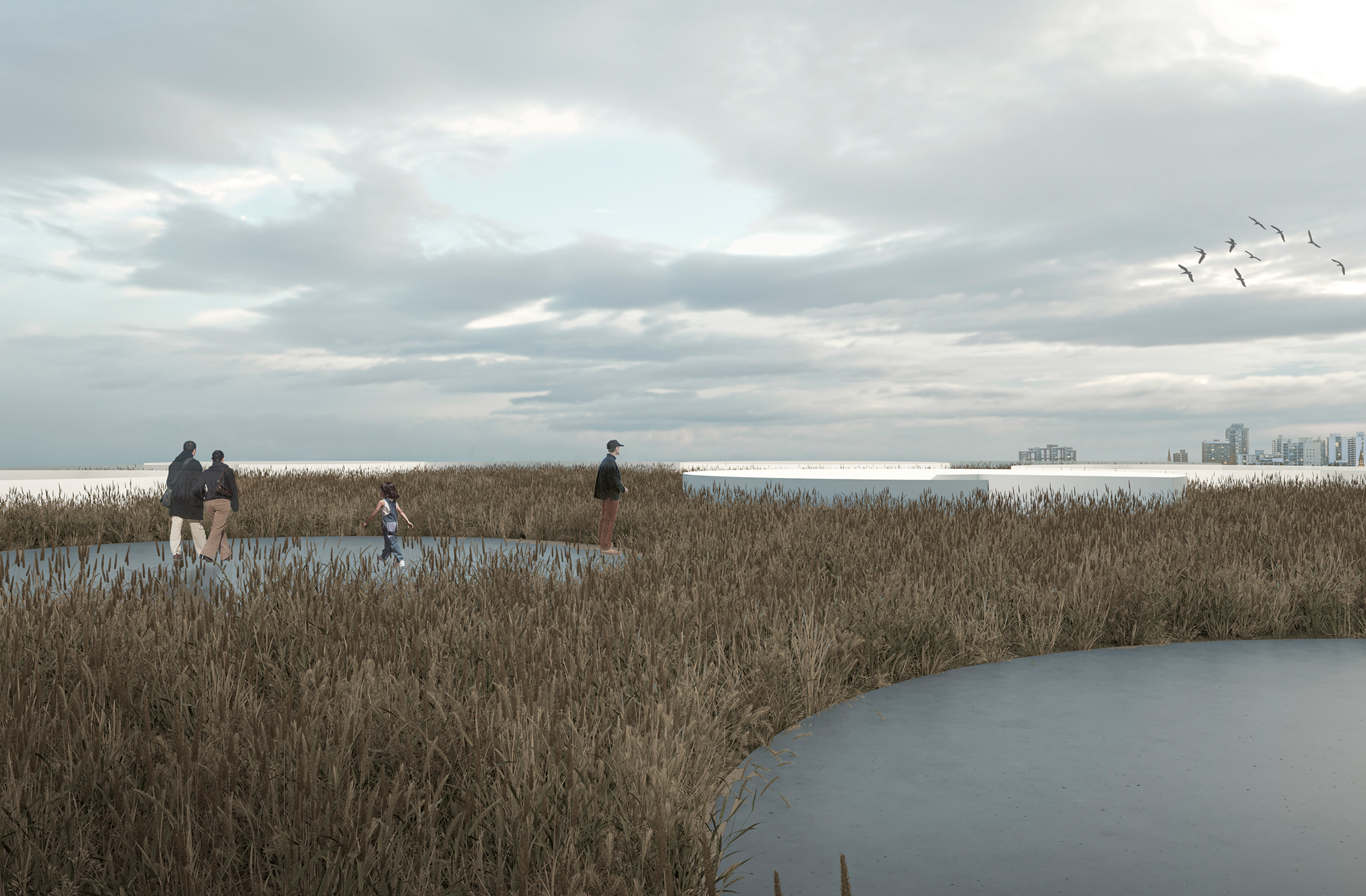
On the rooftop terrace, a large green meadow restores native and wild species from our country and replaces the green footprint that the building removes at ground level. Above it, various raised dry-floor platforms can function as viewpoints and accommodate different informal outdoor activities, with the Expo landscape and the city beyond serving as a backdrop.
ICON
From the outside, the serene presence of the great volume will become an unmistakable landmark of the Expo. The interior activities may be glimpsed in passing, or seen from outside when approaching its perimeter, inviting visitors to enter and be surprised by its interior spatiality and thematic content.
At night, it will become a large and subtle lantern, a beacon within the Expo complex, which through its familiar and everyday image speaks to us of the country’s luminous future.
TEAM
Arraigada, Diego; Cumpa, Jaime; Rota, Leonardo; Brachetta, Franco, Pintado, Facundo Martinez; Gabas, Nestor.
PHOTOS
Tango Visual Studio